
Abatement Technologies Air Duct Cleaning in Vermont Vista: A Homeowner’s Guide
The word HEPA on a contractor’s truck means almost nothing until you know how they’re using it. In negative air mode, a HEPA machine contains contaminants inside your ducts during cleaning. In filtration mode, it just scrubs the exhaust before it leaves the machine. Those are functionally opposite approaches, and most homeowners in Vermont Vista never think to ask which one they’re paying for. Here’s what Abatement Technologies equipment actually does, why its lineage matters, and when it’s the right tool for your home. If you’d rather skip the research and just want honest answers about your ducts, call (833) 620-6973.
What Abatement Technologies Equipment Actually Is
Abatement Technologies makes negative air machines and HEPA-filtered air scrubbers. Their equipment was designed for mold remediation, lead abatement, and asbestos work, the kind of jobs where you cannot let contaminated air escape the work area. In those settings, the machine pulls air through a HEPA filter and exhausts clean air outside, while simultaneously creating negative pressure inside the containment zone. That negative pressure means air flows into the work area through any opening, not out of it. Contaminants stay put.
For air duct cleaning in Vermont Vista, that same principle applies in a specific way. When a technician hooks a negative air machine to your duct system, it pulls air from inside the ducts through the HEPA filter before it ever reaches your living space. The machine runs during the entire cleaning process, not just at the end. That is source containment, and it is a meaningfully different approach than a truck-mounted vacuum that simply sucks debris out to the curb. One method contains. The other extracts. Both can work, but they solve different problems.
Negative Air Pressure vs. Standard Extraction: What Vermont Vista Homeowners Should Understand
Standard truck-mounted systems use powerful suction to pull debris out of your ducts and into a collection tank on the truck. The suction creates airflow through the system, and a rotary brush or air whip dislodges debris from duct walls. It’s effective for routine cleaning. But the exhaust path matters. Some systems filter it. Some vent it outdoors without HEPA filtration. In a dense neighborhood like Vermont Vista, where homes sit close together, unfiltered exhaust is not something you want drifting toward your neighbor’s open window.
Negative air methodology flips the priority. Instead of focusing on how fast debris gets removed, it focuses on making sure nothing escapes into your living space during the process. The HEPA-filtered negative air machine runs continuously, creating a pressure differential that keeps loose particulates moving toward the filter, not out through your registers. This matters most when you’re dealing with:
- Active mold contamination that requires source containment
- Post-remediation verification where air quality testing is involved
- Homes where occupants have documented respiratory sensitivities
- Situations where dust migration during cleaning would be unacceptable
We carry Abatement Technologies equipment in our toolkit for exactly these scenarios. Not every job in Vermont Vista needs it. But when it’s needed, there’s no substitute for containment-grade filtration at the source.
Why HEPA at the Vacuum Source Prevents Cross-Contamination
Here’s a truth most duct cleaning companies in Vermont Vista won’t volunteer: the act of cleaning ducts temporarily disturbs everything inside them. Dust that has been sitting on duct walls for years gets knocked loose. Some of it gets captured by the vacuum. Some of it can escape through seams, around register openings, or through return-air pathways if the system isn’t properly sealed during the job.
HEPA filtration at the vacuum source changes that equation. A true HEPA filter captures 99.97% of particles at 0.3 microns. That’s the standard, and it’s the entire point. When the air being pulled from your ducts passes through that filter before it goes anywhere else, the particles that would otherwise become airborne in your home are trapped in the filter media instead. This is different from systems that use lower-grade filters or exhaust outdoors without meaningful filtration. The difference shows up in the air you breathe during the cleaning and in the dust you don’t find on your furniture afterward.
In our experience, Vermont Vista homeowners with allergy sufferers or recently renovated homes notice this difference most. Renovation dust is fine and pervasive. It settles in ducts and then recirculates for months. A cleaning that contains that dust rather than redistributing it is the whole reason you hired someone in the first place.
The Honest Limitation: Containment Is Not Cleaning
Here’s where the “abatement-grade equipment” marketing gets misleading. A negative air machine does not clean your ducts. It contains what comes out of them. That’s an important distinction, and it’s one most Vermont Vista homeowners never hear from contractors who lean on the abatement label as a selling point.
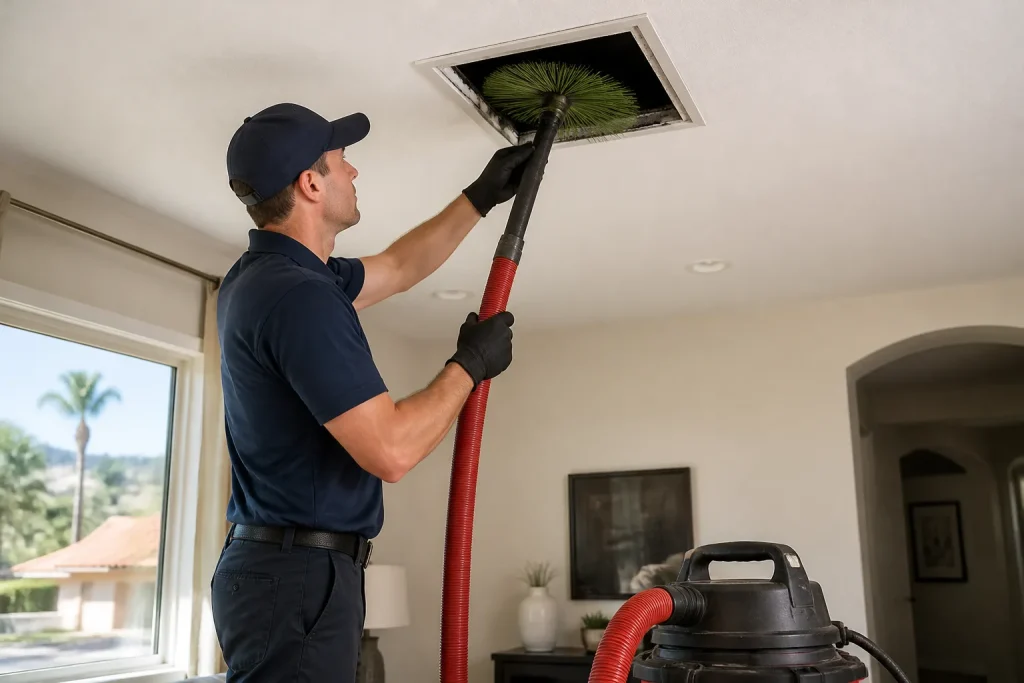
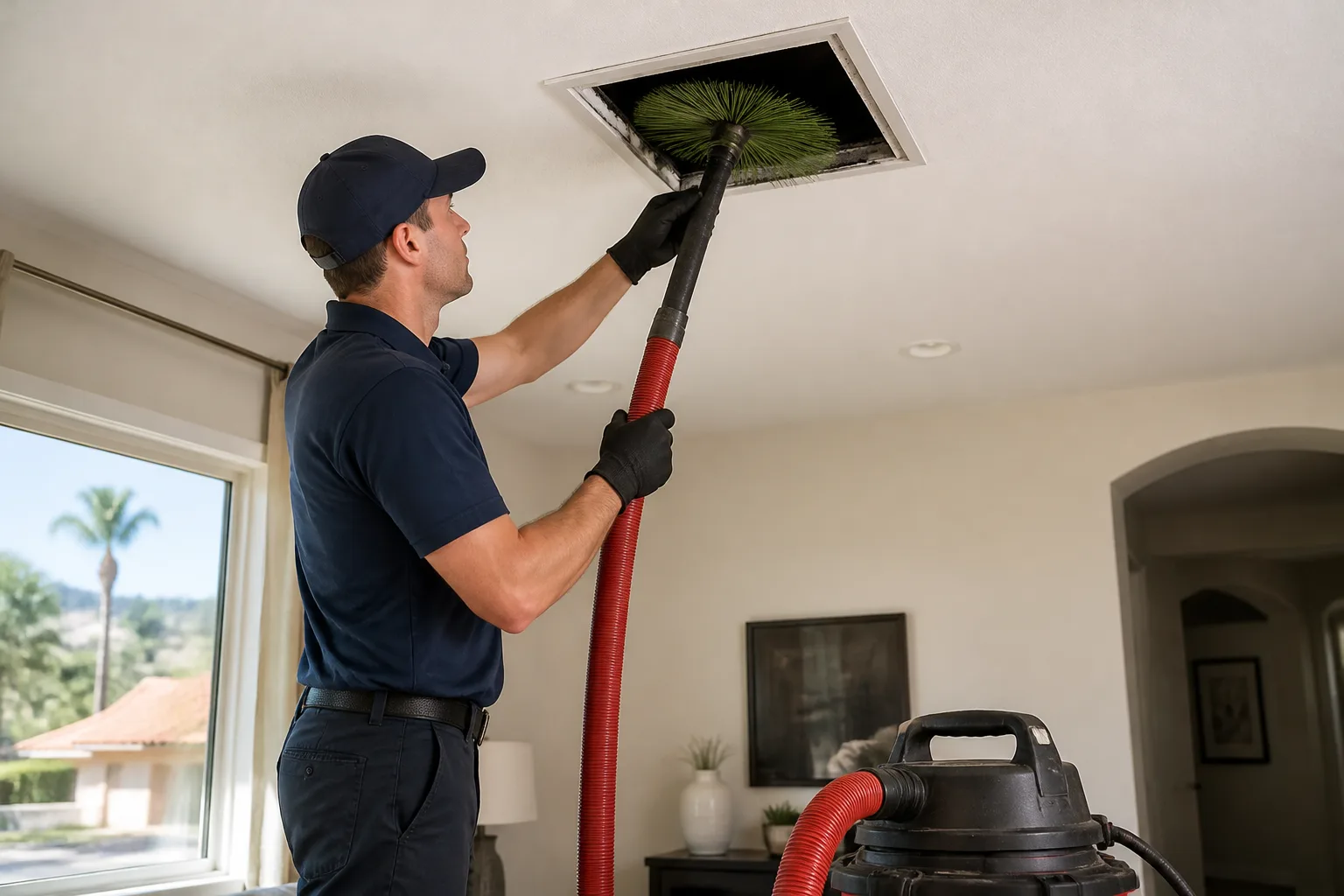
To actually remove debris from duct walls, you need mechanical agitation. Something has to physically dislodge the buildup. That’s where Rivermark Air Duct Cleaning pairs Abatement Technologies negative air equipment with a Rotobrush rotary brush system. The Rotobrush spins against the duct walls, breaking loose the film of dust, pet dander, and debris that suction alone cannot remove. The negative air machine then captures that loosened material under containment conditions. One without the other is incomplete. Containment without agitation leaves the debris in place. Agitation without containment risks spreading it.
If a contractor in Vermont Vista tells you they use abatement-grade equipment, ask what they’re using for agitation. If the answer is vague or they don’t have a mechanical brush system, the HEPA machine is doing a lot less work than the brochure suggests.
What to Ask Any Contractor Claiming Abatement-Grade Equipment
The phrase “abatement-grade” gets thrown around loosely in the duct cleaning industry. It sounds serious. It implies a level of rigor. But without specifics, it’s just words on a truck wrap. Here’s what we’d tell any Vermont Vista homeowner to ask before hiring:
- What’s the CFM rating on the negative air machine? CFM stands for cubic feet per minute. A legitimate negative air machine for residential duct work should move enough air to create real pressure differential in your system. Machines designed for small rooms won’t pull enough air to contain a whole-house duct system effectively.
- Is the filter true HEPA or HEPA-type? True HEPA meets the 99.97% at 0.3 microns standard. HEPA-type is a marketing term with no certification behind it. The difference is not small.
- How do you verify negative pressure during the job? A real containment setup uses a pressure gauge or manometer to confirm the space is actually negative relative to the surrounding area. If the contractor can’t describe how they verify this, they probably aren’t verifying it at all.
- What are you using for mechanical agitation? This is the question that separates a complete cleaning from a filtered vacuuming. The answer should be specific: a rotary brush system, air whips, or similar. “High-pressure air” alone is often code for “we blow it around.”
We ask ourselves these same questions on every job. When the answers matter, the equipment has to match the claim. That’s why we run Rotobrush and Nikro systems alongside our Abatement Technologies equipment, and why we stock Vermont Vista jobs with the right tool for the specific house, not just whatever fits in the van.
When Negative Air Methodology Is the Right Call in Vermont Vista
Not every home needs containment-grade cleaning. Routine dust and debris in a well-maintained system can usually be handled with standard extraction methods. But there are specific situations where the methodology matters more than the machine brand:
Active mold contamination. If mold has been identified in your ductwork or elsewhere in the home, cleaning becomes a containment problem first and a cleanliness problem second. Abatement Technologies equipment was designed for exactly this. The negative air approach prevents mold spores from spreading during the cleaning process.
Post-remediation verification. After a mold or asbestos remediation project, homeowners often want duct cleaning as a final step before air quality testing. In those cases, using HEPA-filtered negative air equipment means the cleaning itself won’t introduce new particulates that skew the test results.
Known indoor air quality complaints. If someone in the home has been experiencing respiratory symptoms that improve when they leave the house, that’s a signal to take containment seriously. The goal is to improve air quality without a transient spike in airborne particles during the cleaning itself.
Homes that have never had ducts cleaned. A house built in the 1980s that’s had thirty years of accumulated dust in its ducts is a different job than a five-year-old system. The sheer volume of material makes containment more relevant. Vermont Vista has plenty of both, and the age of the home should inform the approach.
For most of these situations, we’d recommend a consultation before committing to a specific method. The right answer depends on what’s actually in your ducts, and no one should promise you a specific methodology before they’ve looked.
When to Call a Pro
Duct cleaning is not a DIY project. It requires equipment designed for the job, access to the full duct system, and an understanding of how your HVAC system’s airflow works so the cleaning doesn’t make things worse. If you’re seeing visible dust buildup around registers, noticing persistent dust on surfaces shortly after cleaning, or dealing with respiratory issues that improve away from home, it’s time to have a professional look at the system. If your home in Vermont Vista has had renovation work done, the ducts are almost certainly carrying construction dust that standard vacuuming won’t address. Call us. We answer 24/7. Fast dispatch from 7am to 7pm, Sunday through Friday.
Related services in Vermont Vista: We also offer dryer vent cleaning as a dedicated fire-safety service, and air duct repair for homes where the ductwork itself has deteriorated or disconnected. A cleaning can’t fix a leak, and we’d rather tell you that upfront than sell you a service that won’t solve the problem.
The Bottom Line
Abatement Technologies equipment represents a specific methodology: HEPA-filtered source containment originally designed for mold and asbestos work. That lineage matters because it means the equipment is built to prevent contamination from spreading, not just to suck dust out of a system. But containment is only half the job. Without mechanical agitation from a system like Rotobrush, the debris stays on the duct walls no matter how good the filtration is. The right approach in Vermont Vista depends on what’s in your ducts, the age of your home, and whether anyone in the house has known air quality sensitivities. Ask any contractor claiming abatement-grade credentials about CFM, true HEPA certification, pressure verification, and agitation method. If they can’t answer clearly, the label isn’t doing much work.
If you’re in Vermont Vista and need help, Rivermark Air Duct Cleaning offers free estimates. Call (833) 620-6973. We answer 24/7. Fast dispatch from 7am to 7pm, Sunday through Friday.
Frequently Asked Questions
Abatement Technologies negative air machines are better for containment during duct cleaning, particularly when mold, renovation dust, or known air quality issues are present. They are not inherently better for routine debris removal. That requires mechanical agitation, which is a separate piece of equipment. The brand matters less than how the equipment is used and whether the full cleaning system works together.
Ask for the filter certification class and the equipment’s CFM rating. True HEPA filters meet the 99.97% at 0.3 microns standard. A contractor who verifies negative pressure with a gauge during the job and can show you the equipment is doing what they claim. HEPA-type filters are not the same thing and are not a substitute for true HEPA when containment matters. For a consultation with a team that carries Abatement Technologies equipment, call (833) 620-6973.
Properly done, negative air pressure prevents mold from spreading during cleaning. The machine maintains lower pressure inside the duct system than in the surrounding rooms, so air flows into the ducts rather than out through registers. Spores released during agitation get pulled through the HEPA filter instead of entering your living space. The risk increases if the setup is incorrect or if no pressure verification is done, which is why the technician’s methodology matters as much as the equipment.
No. We carry Abatement Technologies equipment and deploy it when the job calls for containment-grade filtration: active mold concerns, post-remediation work, or homes with known indoor air quality complaints. Routine duct cleaning jobs may not require negative air methodology, and using the right tool for the specific house is the point. We pair our containment equipment with Rotobrush mechanical agitation when the job requires both. Call (833) 620-6973 for a free estimate and an honest recommendation for your Vermont Vista home.
Written by the team at Rivermark Air Duct Cleaning, serving Vermont Vista since 2014.
Need Air Duct Cleaning Help?
Call Rivermark Air Duct Cleaning - licensed & insured, here with fast help in Vermont Vista.
(833) 620-6973