
Last updated November 4, 2026
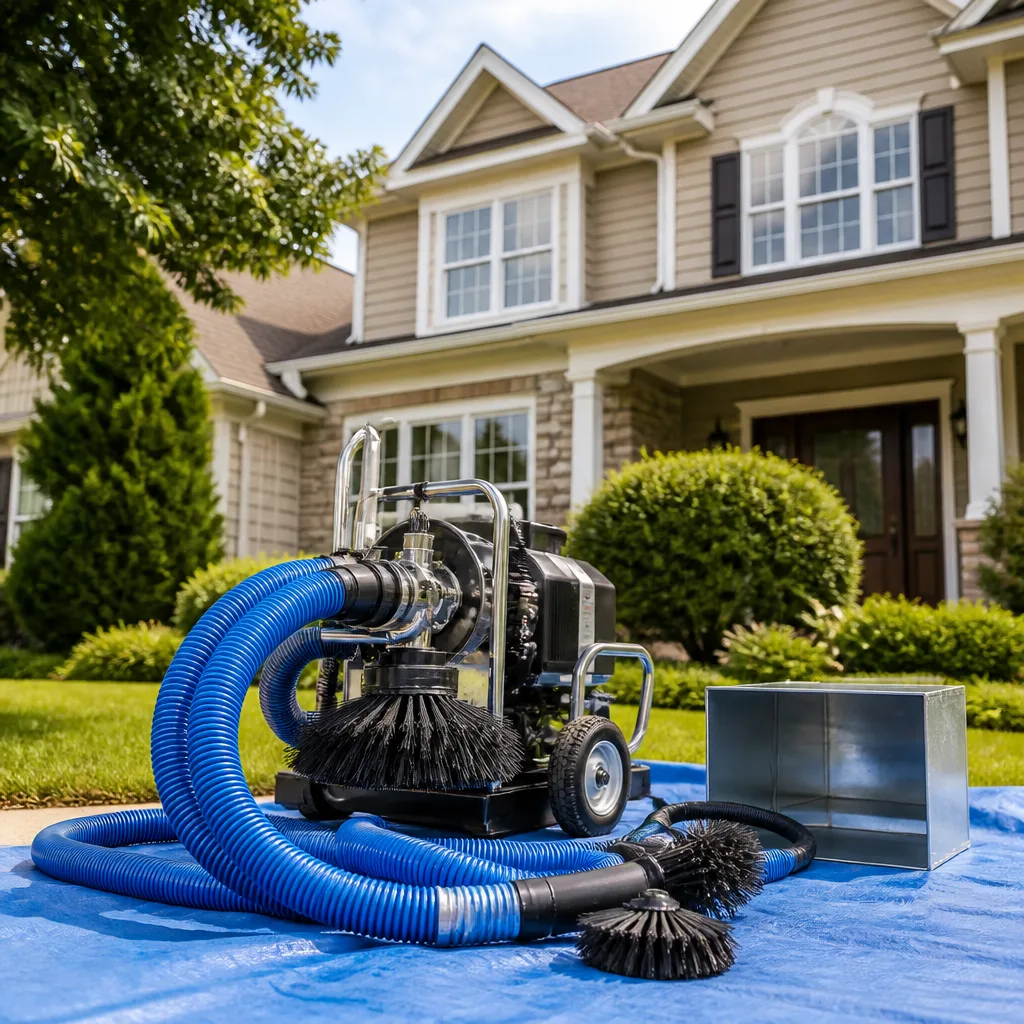 Whole-home duct cleaning
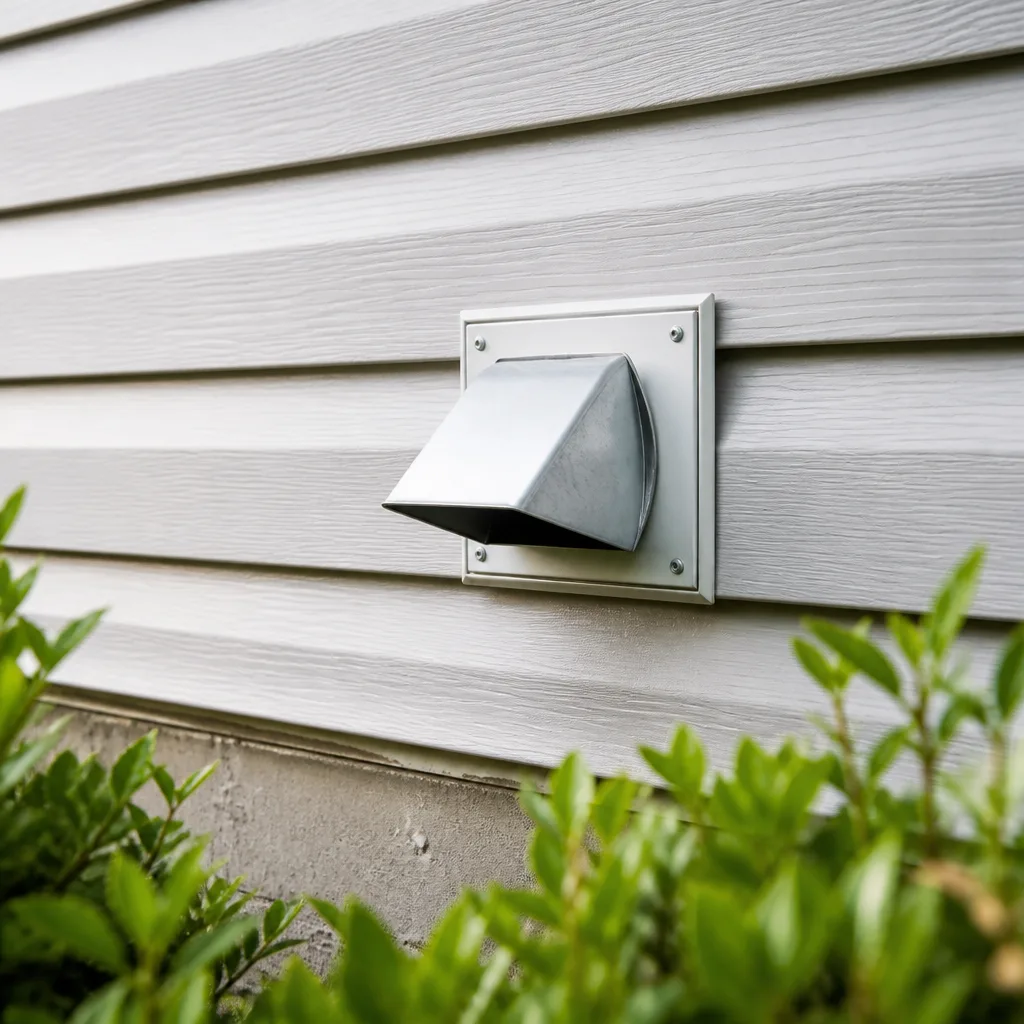 Dryer vent cleaning
 Camera inspection
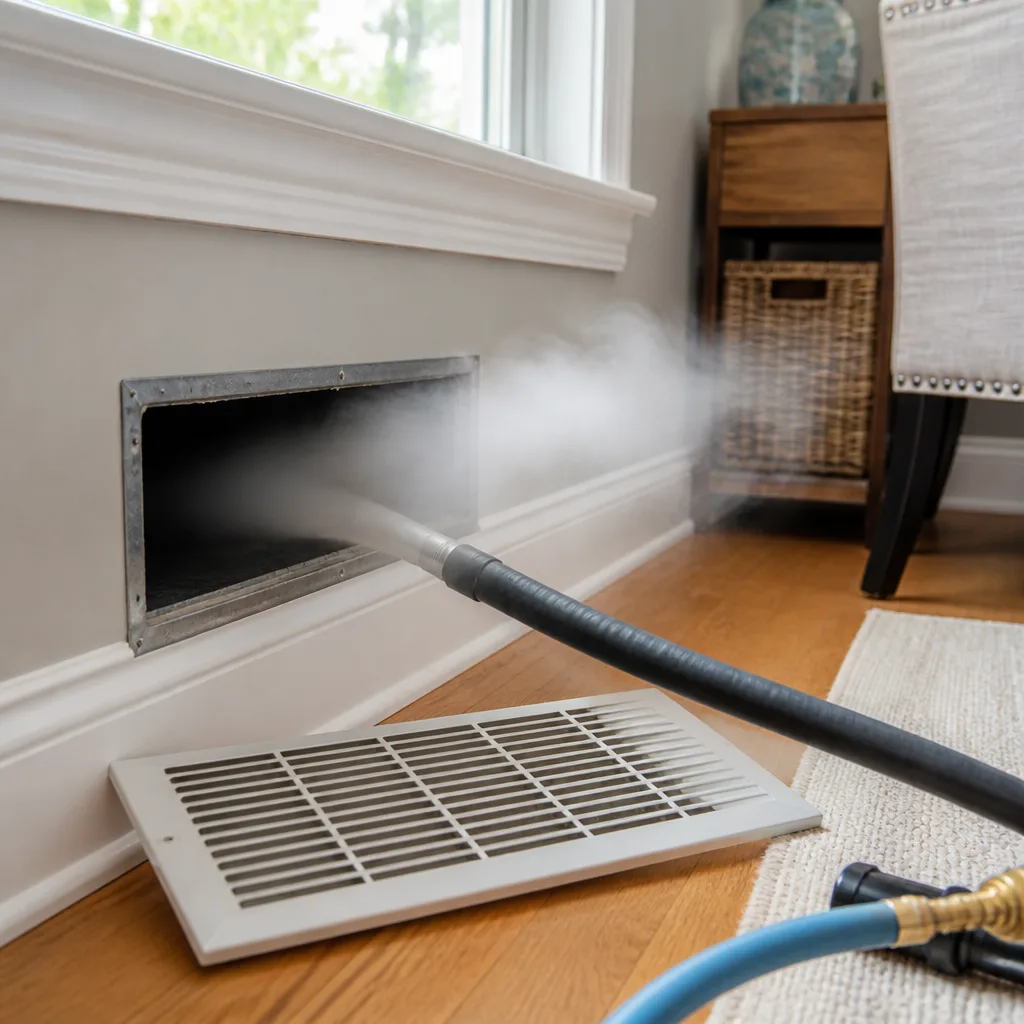 Sanitizing & deodorizing
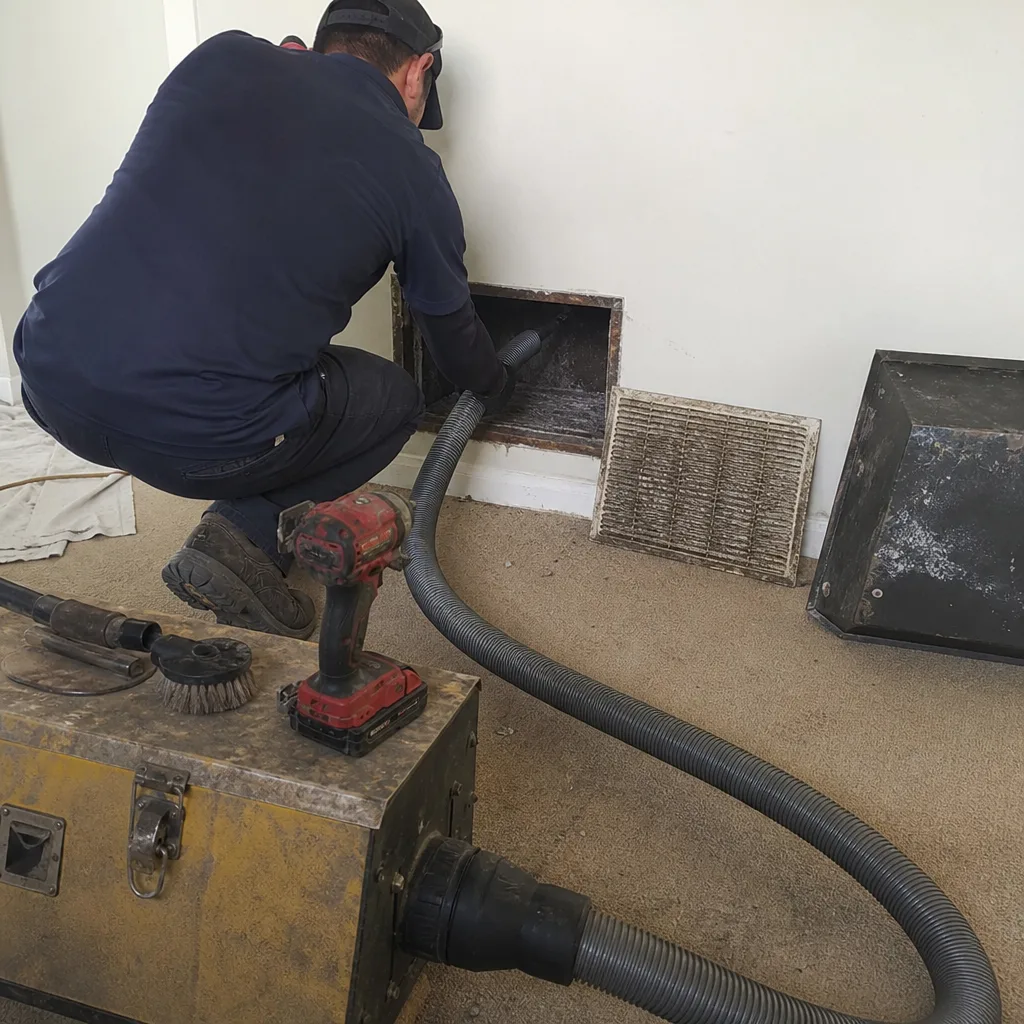
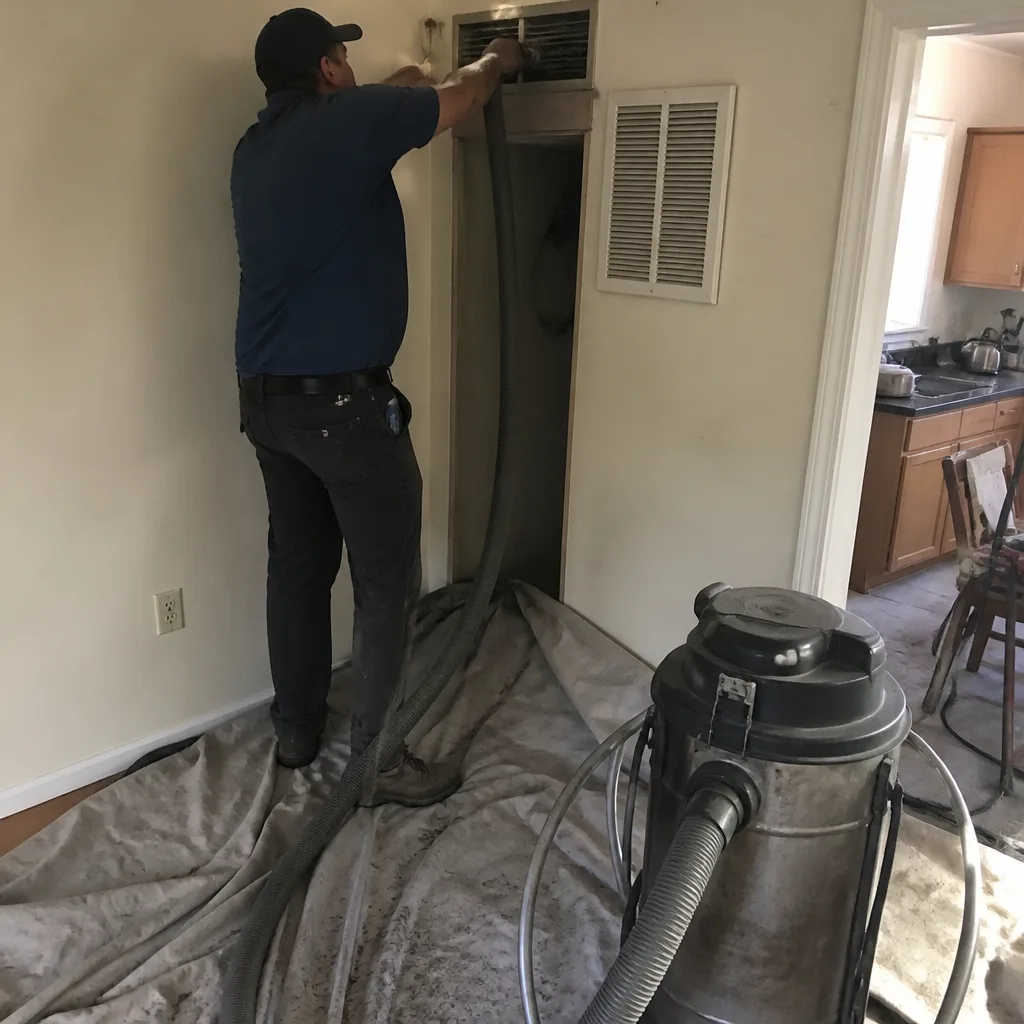
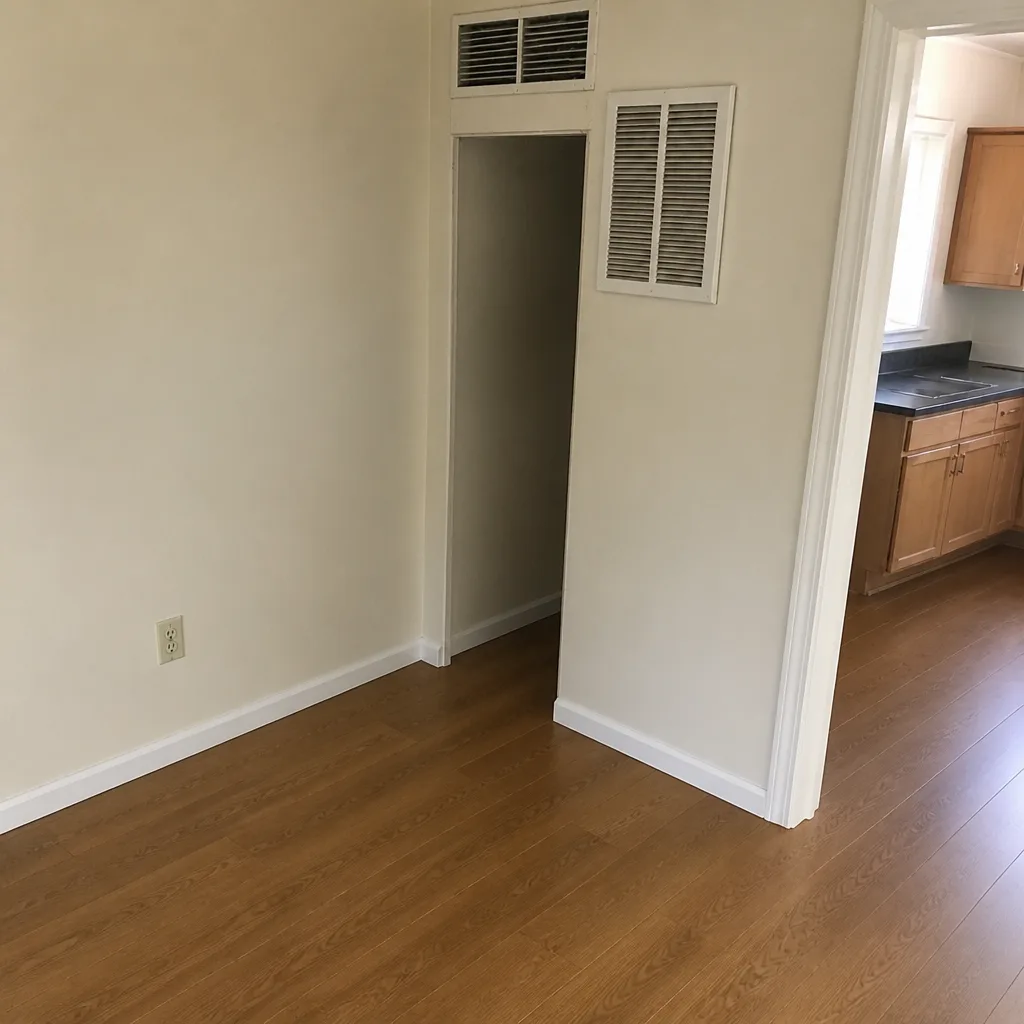
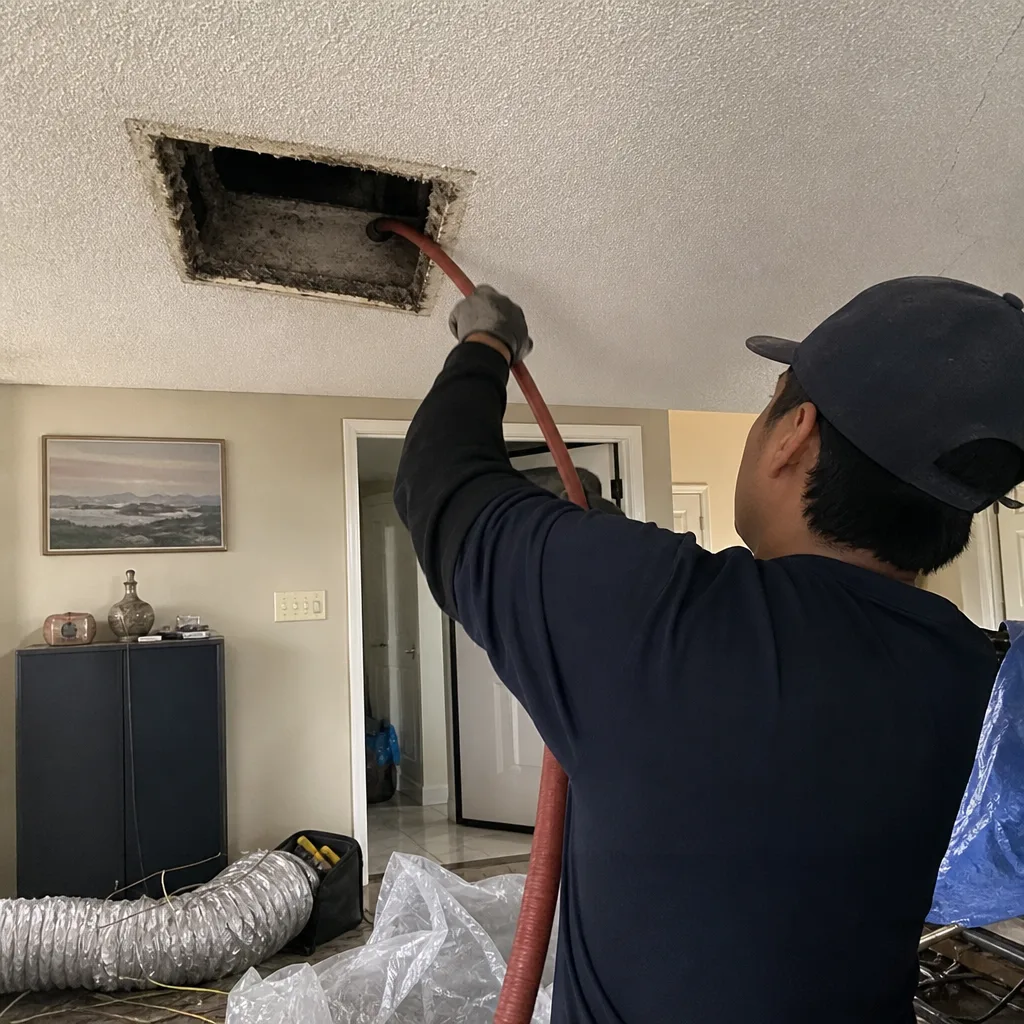
Whole-system duct and dryer vent check with before-and-after photos - you see exactly what came out of your vents
That "$99 whole-house special" is a bait ad - the real number appears once they are in your hallway, or the "clean" is a shop-vac at the register. We photograph the inside of your ducts before and after instead.
Seasonal Air Duct Cleaning Care for Vermont Vista: Year-Round Homeowner’s Guide
The “clean your ducts before heating season” advice was written for the Midwest, where furnaces sit silent for six months and dust settles predictably. Vermont Vista runs on a different clock. Your AC cycles nearly year-round, wildfire smoke can push fine particulate into your system as late as October, and Santa Ana winds move desert dust through every gap in your home’s envelope. This guide maps what each season actually deposits into local ductwork, when it accumulates, and what a realistic maintenance calendar looks like for a home in Vermont Vista. You’ll learn why spring is the critical inspection window here, what fire season does to duct lining, and which checks you can do yourself versus which ones need professional-grade equipment.
Styles & brands we work with
- Whole-home duct cleaning
- Dryer vent cleaning
- Camera inspection
- Sanitizing & deodorizing
Quick Answer
In Vermont Vista, seasonal air duct care follows a three-window calendar: a pre-summer inspection in late spring, a post-fire-season cleaning in late fall, and a post-Santa-Ana check whenever significant wind events occur. Because your AC runs most of the year, ducts collect fine particulate continuously rather than seasonally, which means filter monitoring and visual vent checks should happen every 30 to 60 days. A professional cleaning with rotary brush and negative-air equipment typically makes sense every 2 to 4 years, depending on fire season severity, renovation history, and whether anyone in the home has allergies or respiratory conditions.
Table of Contents
- Spring: The Real Start of Vermont Vista’s Duct Season
- Summer: Peak AC Demand and What It Pulls Through Your Ducts
- Fire Season: June Through November Particulate Loading
- Fall: Santa Ana Winds and the Post-Fire-Season Reset
- Winter: The Mild Season That Still Moves Air
- Marine Layer Moisture: What Late Spring Humidity Does to Duct Interiors
- Month-by-Month Action Calendar for Vermont Vista
- Common Mistakes to Avoid
- When to Call a Professional
- Frequently Asked Questions
- The Bottom Line
Spring: The Real Start of Vermont Vista’s Duct Season
In colder climates, spring means opening windows and giving the HVAC system a rest. In Vermont Vista, spring is when your AC begins its long working year. The transition from mild-weather filter loads to peak-demand operation is the single most important inspection window we see. Here’s why: during winter, your system moves less air. Dust, pet dander, and fabric fibers settle inside supply ducts and along return plenums. When the first warm week arrives and the AC kicks into daily cycling, all that settled material gets lifted and carried through your living space.
What to do in spring:
- Replace or upgrade your filter. If you’ve been using a basic fiberglass filter, spring is the moment to step up. A higher-MERV pleated filter catches more of the fine dust that Vermont Vista’s dry spring air keeps suspended. We work with Honeywell and Aprilaire filtration products for homeowners who want a real filtration improvement rather than a marginal filter swap.
- Check supply registers for visible dust buildup. Remove two or three registers in different rooms and look inside. If you see a gray felt-like coating on the duct walls, that’s accumulated particulate that a filter never caught.
- Listen for new airflow noises. Whistling, rattling, or a change in airflow volume can indicate a disconnected or leaking duct section. Air duct cleaning identifies buildup, but a disconnected duct is a repair issue that cleaning alone won’t fix.
- Inspect the return side. Return ducts pull unfiltered air from your living space. If your return registers sit near pet areas, entryways, or carpeted hallways, expect heavier accumulation there.
Spring is not the season to skip. Because your system will run daily for the next seven to eight months, any problems left unaddressed in April get circulated through every room until late fall.
Summer: Peak AC Demand and What It Pulls Through Your Ducts
Summer in Vermont Vista means your air handler moves thousands of cubic feet of air through your duct system every day. That constant airflow is good for comfort but relentless for duct interiors. Every cycle pulls air across the coil, through the supply plenum, and into rooms that have their own dust sources: bedding fibers, cooking aerosols, tracked-in soil, pet hair, and the fine particulate that settles on horizontal surfaces.
What accumulates in summer is different from spring. Winter buildup is often dry and settled; summer accumulation is active and recirculating. You may notice more dust on furniture even when windows stay closed. That’s not necessarily a leak in your envelope, it’s your ducts carrying particulate that has entered the system at some earlier point. A clean system handles this gracefully. A loaded system distributes it.
Summer maintenance priorities:
- Filter checks every 30 days. In peak AC demand, a loaded filter restricts airflow and forces the blower to work harder. A collapsed filter can send unfiltered air into the supply side. Set a recurring reminder.
- Vent wipe-downs. Supply registers collect dust at the louvers where air exits. Wipe them monthly with a damp cloth. If they’re coated again within a week, that’s a signal the ducts themselves are the source, not ambient room dust.
- Watch for musty odors at startup. A brief musty smell when the AC first cycles on can mean moisture has interacted with organic dust inside the duct lining. In Vermont Vista’s dry summer, this is less common than in humid climates, but it can still occur if condensation drains poorly or the coil pan holds water.
We run Rotobrush rotary brush systems and Nikro negative-air equipment on the jobs we perform in Vermont Vista because the mechanical agitation matters. Suction alone cannot dislodge the compacted layer that builds on duct walls over a long cooling season. It needs to be physically broken loose and then extracted under negative pressure so it doesn’t enter your rooms during the process.
Fire Season: June Through November Particulate Loading
Fire season is the factor that most generic duct cleaning advice completely ignores, and in Vermont Vista it’s impossible to ignore. From June through November, wildfire smoke can drift over the region in concentrations serious enough to affect indoor air. What most homeowners don’t realize is that smoke particulate is extraordinarily fine, often under 2.5 microns, which means it bypasses standard HVAC filters and embeds directly into duct wall dust.
Here’s how it works: smoke enters your home through small gaps around doors, windows, and even through the fresh-air intake your HVAC system may pull from outside. Once inside, your AC circulates it. The fine particles don’t just float in the air, they deposit onto every surface, including the interior lining of your ducts. That deposit becomes part of the duct surface layer, mixed with dust, fibers, and skin cells. The next time the blower kicks on, some of that layer re-enters the airstream. You smell it as a faint campfire odor, or you don’t smell it at all and just feel it in your eyes and throat.
What to do during and after fire season:
- Run the fan on “on” mode, not “auto,” during smoke events. Continuous airflow through a good filter clears more particulate than intermittent cycling.
- Use the highest-MERV filter your system can handle. We install and service Honeywell and Aprilaire filtration products in Vermont Vista for clients who want a real step up during fire season.
- After a significant smoke event, schedule a duct inspection. If smoke entered your home, it entered your ducts. A visual inspection can confirm whether the lining has accumulated a smoke-embedded dust layer.
- Consider a professional cleaning as fire season winds down. Late October or November is the right time in Vermont Vista. The season’s cumulative particulate is in the system, and cleaning before winter means the next several months of lighter AC use start from a clean baseline.
We clean and we repair. If fire season revealed duct sections that are deteriorated or disconnected, Rivermark Air Duct Cleaning can address that in the same visit. A cleaning-only crew leaves those problems for someone else. We don’t.
Fall: Santa Ana Winds and the Post-Fire-Season Reset
Fall in Vermont Vista brings the Santa Ana wind pattern, and with it, the most concentrated particulate-loading event of the year outside of active fire. Santa Ana winds originate inland and push desert dust, pollen, and fine soil through the region at sustained speeds that can last for days. The wind pressure differential alone forces outdoor air through window seals, door weatherstripping, and any gap in the building envelope.
After any significant wind event, here’s what to check:
- Inspect your return registers. Return ducts pull from inside your home, but during high wind events, they also pull in whatever has infiltrated through the envelope. If you see a fine tan or gray coating on the return grille, outdoor particulate made it inside.
- Check your filter earlier than scheduled. A filter that would normally last 90 days can load in two weeks during repeated Santa Ana events. Look at it, don’t assume.
- Walk the perimeter of your home. The gaps that let wind-driven dust into your ducts are the same gaps that let it into your living space. Weatherstripping and door sweeps are duct maintenance in disguise.
- Consider a post-wind cleaning if you have allergies. For homes with allergy sufferers, the fine particulate driven in by Santa Ana winds is a real trigger. A professional cleaning removes it from the one place you can’t reach: the duct interior.
Fall is also the natural moment for the post-fire-season reset. If your home experienced smoke exposure during the summer and early fall, a thorough duct cleaning in late fall puts the system back to a clean baseline before the mild winter season begins.
Winter: The Mild Season That Still Moves Air
Vermont Vista winters are mild by national standards, which means your HVAC system never really rests. You may run the AC on warm days and the heat on cool nights, sometimes in the same week. That constant cycling means ducts don’t get the long dormant period that colder climates rely on for dust to settle predictably.
What winter does in Vermont Vista is redistribute. The air handler runs less than in summer, but it still runs. The particulate that accumulated during fire season and Santa Ana winds doesn’t just sit in the ducts: it keeps moving, keeps settling on your furniture, keeps passing through your filter, and keeps depositing into the layer on the duct walls. Homes that skipped a post-fire-season cleaning often notice the effects most clearly in December and January, when windows are closed and indoor air has no escape.
Winter maintenance priorities:
- Keep up the 30-day filter check. Even with lighter system use, a filter exposed to smoke-season particulate is already working harder than its rated lifespan assumes.
- Watch for dust accumulation on horizontal surfaces. If you’re dusting more than usual with windows closed, the source is inside the system.
- Check dryer vent airflow. Winter is when dryer loads increase and lint buildup can restrict airflow. Dryer vent cleaning is a separate safety service we offer, and winter is a good time to schedule it if you haven’t in the past year.
Winter in Vermont Vista is not an off-season. It’s the season when the consequences of earlier neglect become visible.
Marine Layer Moisture: What Late Spring Humidity Does to Duct Interiors
Late spring in Vermont Vista brings marine layer mornings: low clouds, higher humidity, and cooler temperatures that persist into the late morning before burning off. That moisture pattern matters for your ducts in a specific way. When humid marine air contacts the cooler surfaces inside your duct system, it can condense. The resulting moisture interacts with the organic dust already present on duct walls, and that’s where mold risk begins.
This is not the same as standing water in your ducts, which is rare in Vermont Vista unless there’s a drainage problem at the coil. What we’re describing is a surface-level dampness that persists for hours at a time on mornings when the marine layer sits over the neighborhood. Over a spring season, repeated damp-dry cycles can transform a dusty duct interior into a musty one.
What to look for:
- Musty odor at AC startup in the morning. This is the classic sign of moisture interacting with duct wall dust. The smell fades as the system runs and dries out, but it returns the next morning.
- Visible darkening at supply registers. If the inside edges of your registers show dark speckling that wipes off with difficulty, that may be microbial growth feeding on accumulated dust.
- Increased allergy symptoms in spring. Mold spores in duct interiors get distributed every time the blower runs, even if the visible mold is minimal.
If you see these signs, a professional cleaning with mechanical agitation and negative-air extraction addresses both the dust layer and the microbial growth it supports. In our experience in Vermont Vista, the homes with the worst musty duct odor are often ones where the marine layer pattern combines with an older duct system that has never been cleaned. The two factors compound each other.
Month-by-Month Action Calendar for Vermont Vista
Here is a realistic seasonal schedule for duct care in Vermont Vista. It differs from generic national calendars because it follows the actual local conditions: year-round AC demand, fire season, Santa Ana winds, and marine layer moisture.
January
Quiet month for the system, but not for checking. Replace the filter if you haven’t since fire season. If December dust levels were high, inspect supply registers. Book a professional cleaning now if you skipped it in the fall: scheduling is easier in the mild winter months, and your system gets a clean baseline before spring.
February
Keep the 30-day filter check. Watch for any lingering smoke odor when the heat cycles on. If you notice it, the fire-season particulate is still in the ducts and will keep circulating until removed.
March
Marine layer mornings begin. Start listening for musty odors at startup. If you smell it, don’t wait until summer: schedule an inspection while the system is running lighter.
April
Peak marine layer month. This is the best inspection window of the year in Vermont Vista. Replace filters, check registers, and book your pre-summer duct cleaning if you’re due. A clean system entering peak AC demand is the single most effective seasonal step you can take.
May
Marine layer fades, first warm weeks arrive. The transition from light to heavy system use is the moment settled winter dust gets mobilized. If you haven’t had a cleaning and you’re seeing dust on furniture right after the AC kicks on, the ducts are the source.
June
Fire season begins. Install a higher-MERV filter if your system can handle it. Run the fan continuously during smoke events. This is also the month to schedule a dryer vent cleaning before summer laundry loads increase.
July
Peak AC demand. Filter check every 30 days, no exceptions. If the system is running full time and you smell nothing unusual, your spring maintenance paid off. If you skipped it, this is when you’ll notice.
August
Fire season in full swing. Watch air quality reports and run the fan on “on” mode during smoke days. If smoke enters the home, note it: that means it’s in the ducts too, and the post-season cleaning becomes more important.
September
Fire season continues. Keep the filter discipline. Consider scheduling your post-fire-season cleaning now for a date in late October or November, before the calendar fills.
October
Santa Ana winds typically begin. After any significant wind event, check return registers and the filter. If wildfire smoke was a factor this year, this is the right month for a professional duct cleaning.
November
Post-fire-season reset. The ideal window for a thorough cleaning in Vermont Vista. The year’s cumulative particulate, from smoke and Santa Ana winds alike, is in the system. Removing it means the mild winter months start clean. We also recommend checking for any duct damage discovered during the cleaning: Rivermark Air Duct Cleaning repairs ductwork in the same visit when needed.
December
Light system use, windows closed, indoor air has no escape. If you cleaned in November, you’ll notice the difference: less dust on furniture, no lingering smoke odor, and a system that’s ready for the spring transition. If you didn’t, this is the month to schedule the cleaning you put off.
Common Mistakes to Avoid
- Following a national seasonal calendar. The “clean before heating season” advice assumes a cold winter and a dormant summer. In Vermont Vista, your AC runs most of the year, which means the pre-summer window is the critical one, and the post-fire-season window is the close second.
- Assuming a good filter makes duct cleaning unnecessary. Filters catch what passes through them; they do nothing for the particulate already embedded in duct walls. Over years, that layer accumulates regardless of filter quality.
- Cleaning only after a visible problem appears. By the time you see dust blowing from registers or smell mustiness at startup, the accumulation is significant. A seasonal schedule prevents the problem rather than reacting to it.
- Ignoring Santa Ana wind events. Each significant wind event drives outdoor particulate through your envelope and into your system. Treat the post-wind check as a regular step, not an occasional one.
- Skipping the post-fire-season cleaning because the air inside smells fine. Smoke particulate can be present without a detectable odor. The fine particles embed in dust and release gradually. If smoke entered your home, it’s in your ducts.
- Hiring a cleaning-only company for a home with aging ductwork. Older duct systems often have leaks, disconnections, or deteriorated sections that cleaning exposes but doesn’t fix. We carry Abatement Technologies air equipment and perform air duct repair, which means one visit addresses both the cleaning and the structural problems.
- Confusing dryer vent cleaning with duct cleaning. They’re different services with different goals. Dryer vent cleaning is a fire-safety service that removes lint from the exhaust path. Duct cleaning addresses your HVAC distribution system. Both matter, but they’re not interchangeable.
When to Call a Professional
Some duct problems are visible and obvious: dust blowing from registers, musty odor at startup, or a return grille coated in gray fuzz. Others require professional equipment to confirm. If you’ve had smoke intrusion from wildfire season, a renovation that pushed drywall dust into the system, or you’ve lived in the home for more than three years without a cleaning, a professional inspection is the right next step. Persistent allergy symptoms that improve when you leave the house also point to what’s in the air, and the ducts are the distribution path. Rivermark Air Duct Cleaning offers free estimates in Vermont Vista. We run Rotobrush rotary brush systems and Nikro negative-air equipment, and we repair ductwork in the same visit when needed. Call (833) 620-6973 to schedule. We answer 24/7, with fast dispatch from 7am to 7pm, Sunday through Friday.
Frequently Asked Questions
In Vermont Vista, most homes benefit from professional air duct cleaning every 2 to 4 years. The exact interval depends on fire season severity, whether you have pets, whether anyone in the home smokes or has allergies, and whether you’ve had recent renovations. Homes that experience significant wildfire smoke intrusion should be cleaned at the end of that fire season regardless of the calendar interval.
Wildfire smoke contains particles under 2.5 microns that bypass standard HVAC filters and embed directly into the dust layer on duct walls. Once embedded, those particles release gradually into your airstream for months after the smoke event. A professional cleaning with rotary brush agitation and negative-air extraction removes the smoke-embedded layer rather than leaving it to recirculate. Call (833) 620-6973 for an exact quote, estimates are free.
Spring is when your AC transitions from light winter use to peak daily demand. Any dust and particulate that settled in the ducts during winter gets lifted and distributed through your living space during that first warm week. A pre-summer inspection and cleaning means the entire nine-month cooling season starts from a clean baseline rather than a loaded one.
The most common sign is a musty odor when the AC first cycles on in the morning, especially during April and May when the marine layer sits over Vermont Vista. The odor fades as the system dries out, but it returns the next morning. Visible darkening at the edges of supply registers is another indicator. If you notice either, a professional cleaning addresses the dust layer that the moisture is feeding on.
Not after every wind event, but after significant ones. If you see fine dust on return registers, if your filter loads faster than expected, or if you notice increased dust on furniture following a multi-day Santa Ana episode, wind-driven particulate has entered your home and your ducts. For homes with allergy sufferers, a professional cleaning after the fall wind season is worth scheduling.
Dryer vent cleaning removes lint from the exhaust path that carries hot air from your dryer to the outside. It’s a fire-safety service, not a comfort service. HVAC duct cleaning addresses the distribution system that carries heated and cooled air through your home. They serve different purposes and use different equipment. We offer both as dedicated services.
The Bottom Line
Seasonal duct care in Vermont Vista doesn’t follow the national calendar, and pretending it does leaves your system carrying particulate that your AC then distributes through nine months of cooling demand. The three windows that matter are late spring, before peak AC season begins; late fall, after fire season and the first Santa Ana events; and after any significant wind or smoke intrusion, regardless of the month. Filters matter, but they can’t remove what’s already embedded in duct walls. A professional cleaning with rotary brush and negative-air equipment, performed at the right time for this climate, is the difference between a system that accumulates problems and one that starts each season clean. That’s the whole point of seasonal care: not cleaning more often, but cleaning at the moments that actually matter here.
Written by the team at Rivermark Air Duct Cleaning, serving Vermont Vista since 2014.
See the difference
 Before
 After
 Before
 After
 Before
 After