
Last updated November 4, 2026
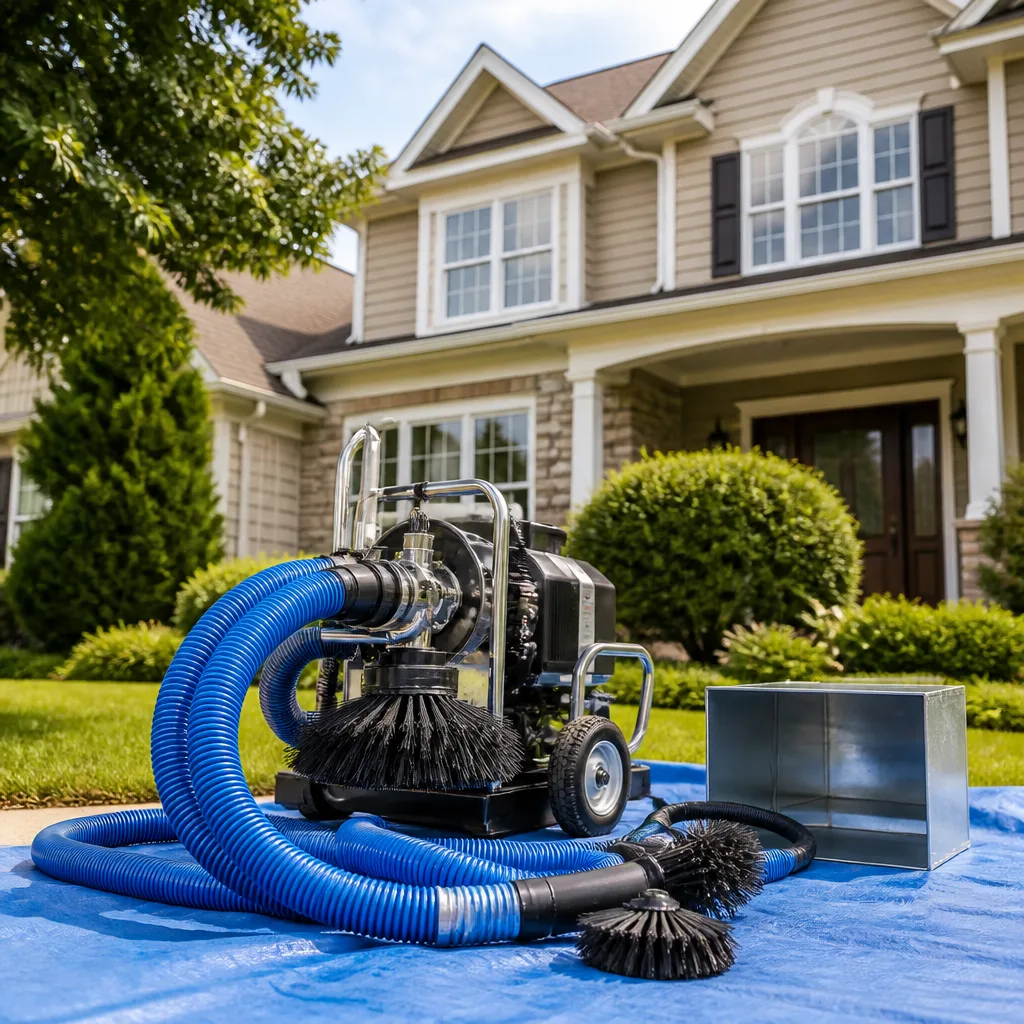 Whole-home duct cleaning
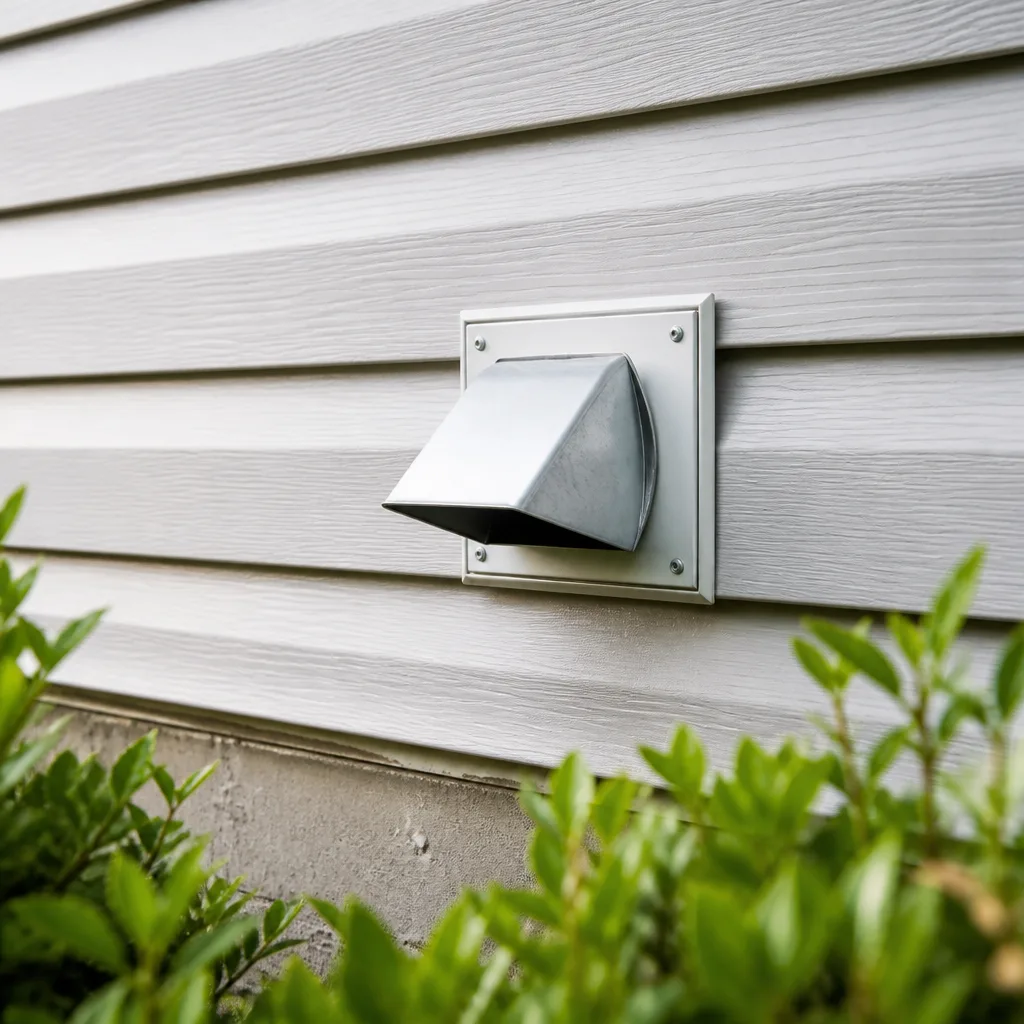 Dryer vent cleaning
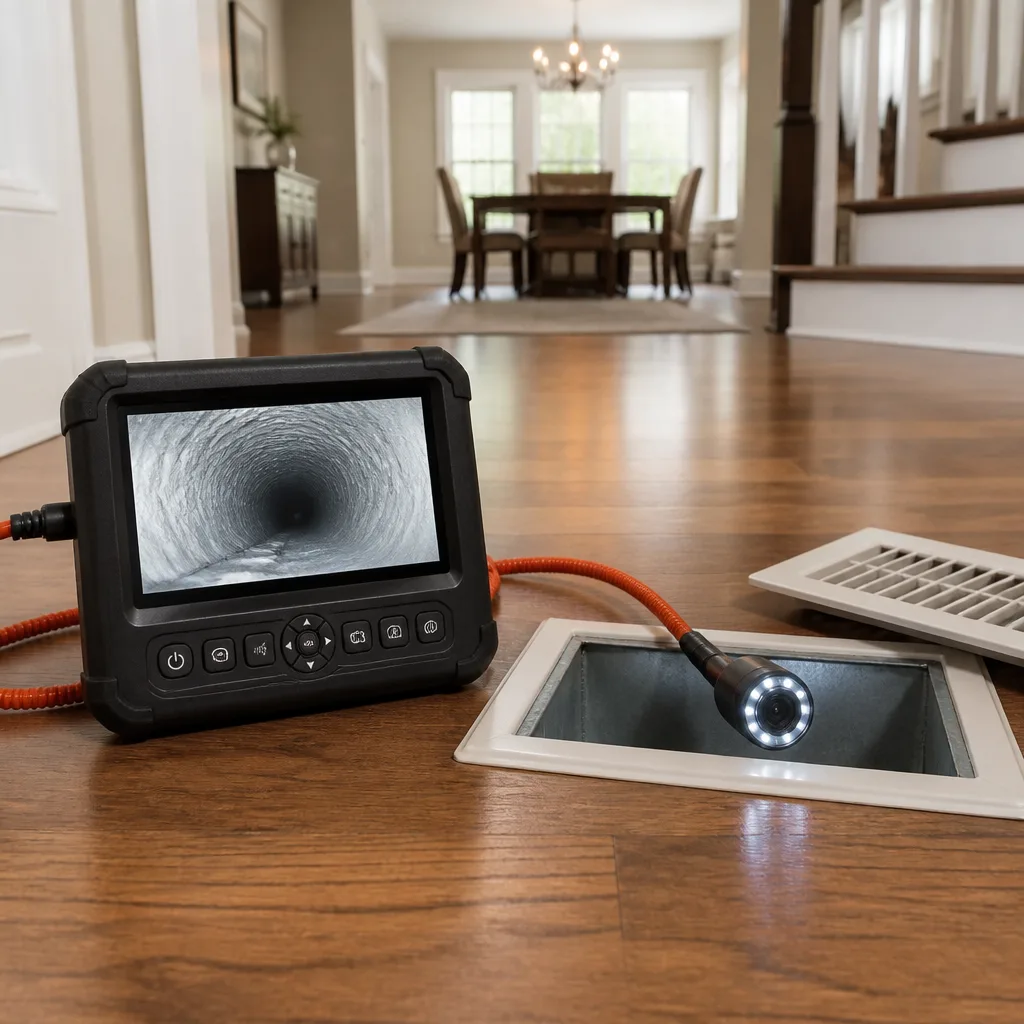 Camera inspection
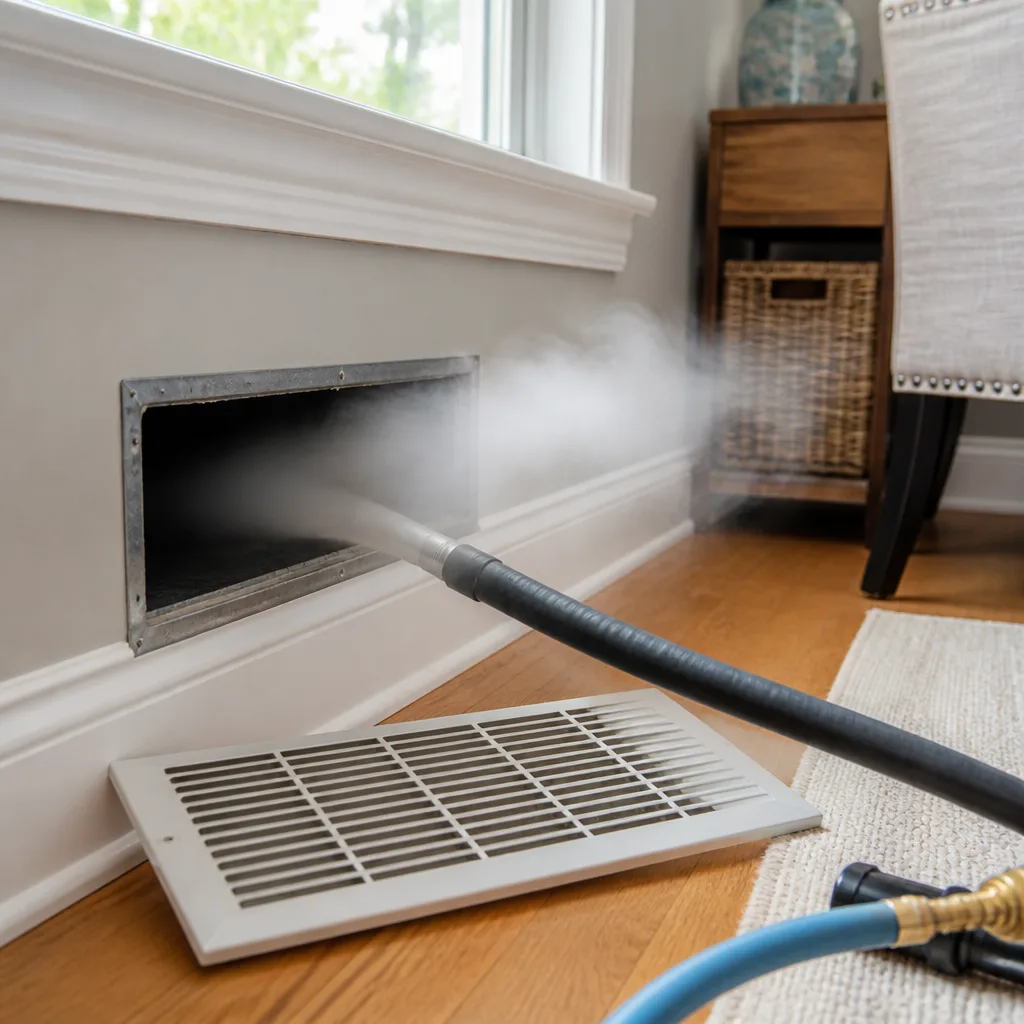 Sanitizing & deodorizing
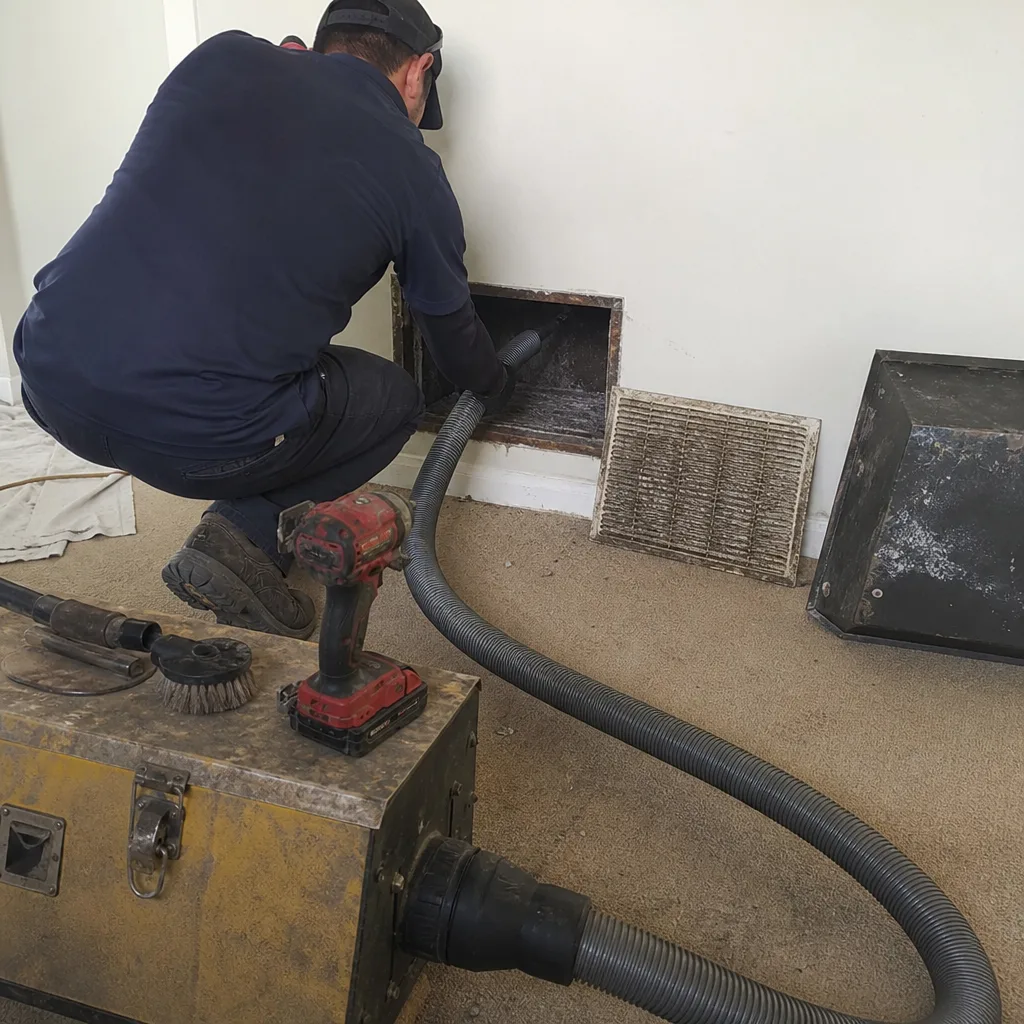
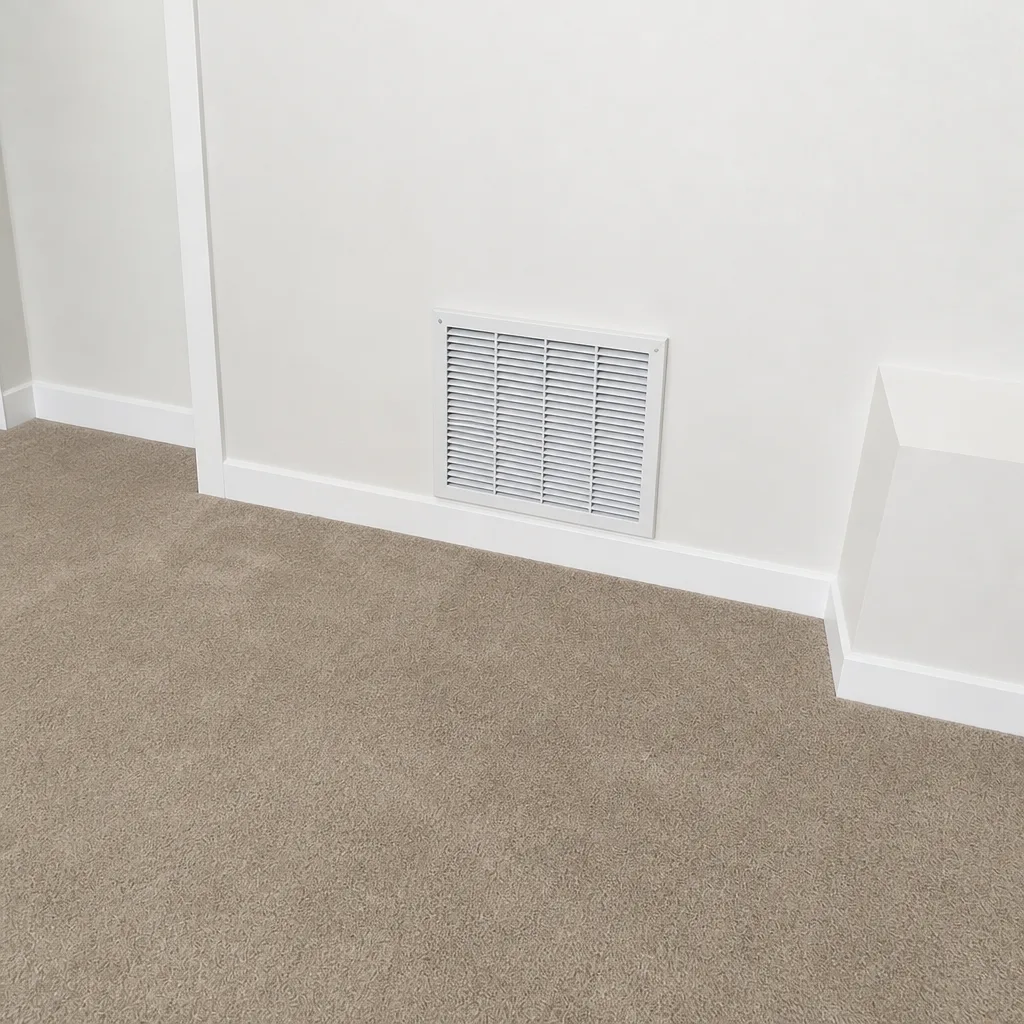
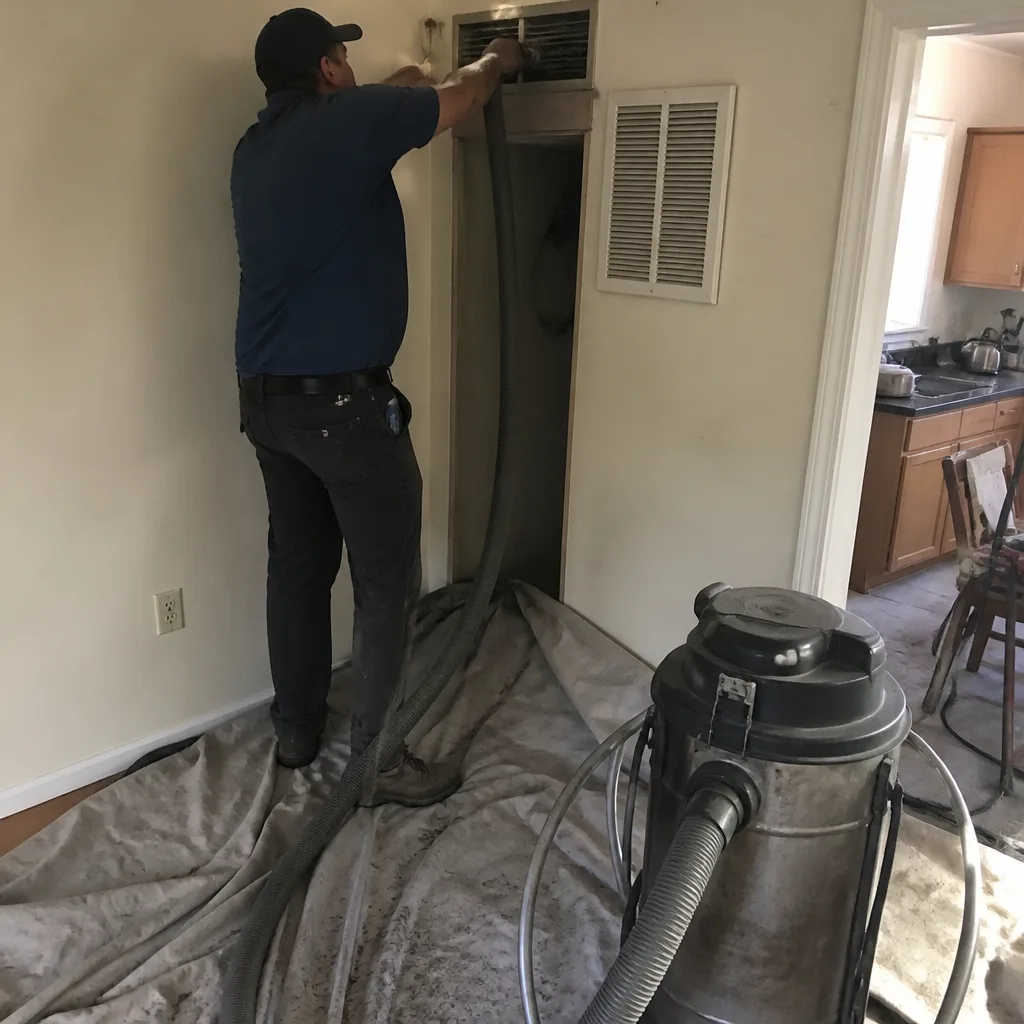
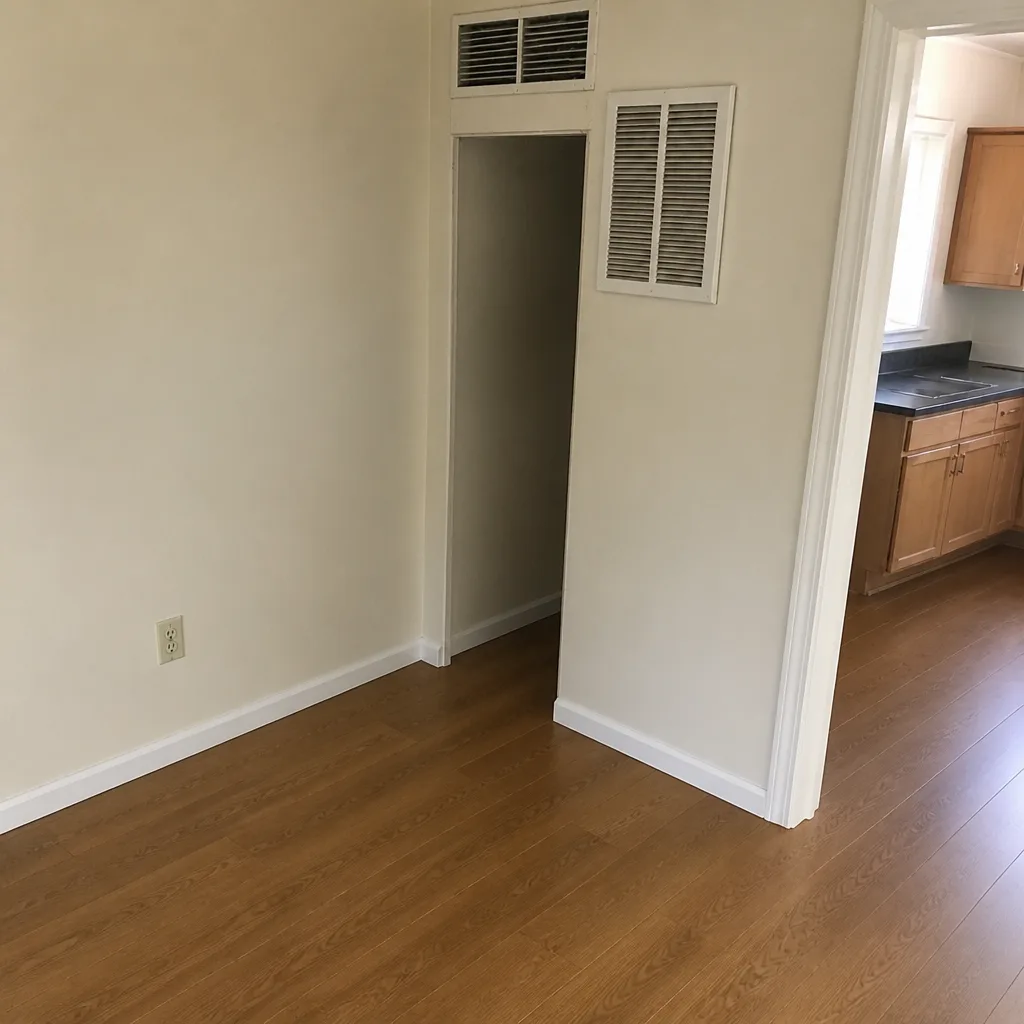
Whole-system duct and dryer vent check with before-and-after photos - you see exactly what came out of your vents
That "$99 whole-house special" is a bait ad - the real number appears once they are in your hallway, or the "clean" is a shop-vac at the register. We photograph the inside of your ducts before and after instead.
Choosing the Right Air Duct Cleaning Brand: A Buyer’s Guide for Vermont Vista
There’s a quiet assumption most homeowners make when they start calling around for air duct cleaning in Vermont Vista: that the company name on the truck represents a “brand” in the way Kohler represents plumbing fixtures or Trane represents HVAC equipment. It doesn’t. Air duct cleaning is an unbranded trade. No national franchise controls the equipment, the training, or the diagnostic standards of the person who shows up at your door. What you’re actually buying is a technician’s gear, their inspection habits, and whether they clean ductwork or merely vacuum it. This guide will teach you how to evaluate those variables directly, so you can make a decision based on technical capability rather than a logo or a star rating.
Styles & brands we work with
- Whole-home duct cleaning
- Dryer vent cleaning
- Camera inspection
- Sanitizing & deodorizing
Quick Answer
The right air duct cleaning company in Vermont Vista is the one that uses professional-grade rotary brush and negative-air equipment, inspects your system before quoting, and can repair damaged ductwork rather than cleaning around it. Look for brands like Rotobrush and Nikro in their toolkit, ask about NADCA certification for technicians, and confirm they offer duct repair in-house. A cleaning-only crew with portable equipment is fundamentally a different service level than a full-scope indoor air specialist.
Table of Contents
- Why Equipment Is the Real Brand
- Rotary Brush vs. Portable Vacuum: The Technical Divide
- Negative-Air Equipment: What It Does and Why It’s Non-Negotiable
- Diagnostic Capability: How to Spot a Company That Actually Inspects
- What NADCA ASCS Certification Tests (and What It Doesn’t)
- Why Duct Repair In-House Changes the Value Proposition
- Five Questions to Ask on the Phone That Reveal Everything
- Common Mistakes to Avoid
- When to Call a Professional
- Frequently Asked Questions
- The Bottom Line
Why Equipment Is the Real Brand
The word “brand” suggests consistency. A Big Mac in Vermont Vista tastes like a Big Mac in Omaha. A licensed plumber with a Roto-Rooter franchise follows a corporate operations manual. Air duct cleaning has no equivalent. Two companies working the same Vermont Vista street can carry completely different equipment, follow completely different procedures, and deliver outcomes that don’t resemble each other at all. One company might send a technician with a Rotobrush rotary brush system and Nikro negative-air containment. Another might send a technician with a portable shop vacuum and an extension wand. Both will call the service air duct cleaning. Only one actually is.
This is why the equipment list is the most honest branding signal in this trade. A company that invests in professional-grade systems has committed capital to doing the job correctly. A company that uses consumer-grade tools has committed to doing it cheaply. The equipment is the brand. The name on the truck is decoration.
When we talk to Vermont Vista homeowners about what separates professional cleaning from the alternatives, we start with the mechanical agitation question. Dust, pet dander, construction debris, and allergen particles don’t simply float free inside ductwork. They adhere to the walls, settle into corners, and pack into return boots. Suction alone, no matter how powerful the vacuum, leaves a significant percentage of that material in place. Professional cleaning requires agitation: a motorized brush that physically scrubs the duct walls and dislodges the buildup so airflow can carry it out of the system. That’s the Rotobrush distinction in practice. It’s not a different level of effort. It’s a different physical process.
Vermont Vista’s housing stock makes this distinction particularly relevant. Many of the homes here were built decades ago, and duct systems have accumulated years of dust, pet hair, and household debris. Newer homes with recently installed HVAC still carry construction dust from drywall sanding and flooring installation. In both cases, a gentle pass with a vacuum wand won’t restore the system. Mechanical agitation will.
Rotary Brush vs. Portable Vacuum: The Technical Divide
The most consequential equipment decision in air duct cleaning is whether the company uses a rotary brush system or relies on vacuum suction alone. This single variable predicts more about the outcome than any review platform score.
A rotary brush system, such as the Rotobrush units carried by professional duct cleaners, pairs two functions. A motorized brush head rotates inside the duct, scrubbing the walls and dislodging caked-on debris. Simultaneously, a high-powered vacuum captures the loosened material and carries it out of the home. The brush does the mechanical work; the vacuum does the removal. Without the brush, the vacuum is trying to lift material that is physically adhered to a surface. It’s the difference between sweeping a floor and just running a hose over it.
Portable consumer vacuums, even industrial-looking shop vacs, have several inherent limitations. First, their airflow is dramatically lower than professional systems. Second, they lack the reach to effectively clean the full length of a duct run. Third, they typically vent exhaust back into the living space, which can reintroduce fine particles rather than removing them. Fourth, and most importantly, they don’t agitate. They rely on suction alone, which leaves a film of dust on duct walls that becomes a fresh surface for future accumulation.
Here’s what to look for when evaluating a Vermont Vista company’s equipment:
- Rotary brush agitation: Does the company describe a mechanical brushing process, or only “powerful vacuuming”? If the word “brush” doesn’t appear in their service description, ask directly.
- Negative-air containment: Professional systems such as Nikro units create negative pressure inside the duct system during cleaning. This pulls loosened debris toward the vacuum rather than allowing it to escape into the home.
- Truck-mounted vs. portable: Truck-mounted systems offer significantly more airflow than portable units. That said, a well-designed portable negative-air system in skilled hands can do quality work. The key variable is whether the vacuum is generating negative pressure in the duct, not where the motor sits.
- Brush sizing: Ducts come in different diameters. The technician should carry multiple brush sizes, not a single one-size-fits-most head.
We carry Rotobrush rotary brush systems and Nikro negative-air equipment for exactly this reason. The two systems work together: agitation loosens, negative pressure contains, and extraction removes. That’s the mechanical sequence professional cleaning requires.
Negative-Air Equipment: What It Does and Why It’s Non-Negotiable
Negative-air technology is the containment half of professional duct cleaning, and it’s the piece most often skipped by budget operators. Understanding what it does explains why.
When a technician cleans ducts, the process dislodges particulate matter: dust, skin cells, pollen, mold spores, construction debris. If the cleaning system isn’t pulling those particles out of the living space as they’re released, they end up settling on furniture, floors, and countertops. Negative-air equipment prevents this by creating lower air pressure inside the duct system than in the surrounding room. Air naturally flows from high pressure to low pressure, so the pressure differential pulls released particles toward the extraction point instead of letting them drift into the home.
Nikro is one of the established names in this category. Their negative-air machines are used by commercial HVAC contractors and remediation professionals, not just residential duct cleaners. The same brand philosophy extends to Abatement Technologies, whose air equipment appears in commercial and remediation-grade projects. When a Vermont Vista company carries this class of equipment, it signals that their process is built around containment as a design principle, not an afterthought.
The absence of negative-air capability is a red flag. A company that only uses positive-pressure or suction-only equipment cannot guarantee that loosened debris won’t escape into the home. In practice, this means the homeowner pays for a cleaning and may end up with more visible dust on surfaces than they started with. For Vermont Vista homes with allergy sufferers or anyone sensitive to airborne particulates, that’s not a minor inconvenience. It’s the opposite of the service’s purpose.
Ask the company directly: “Do you use negative-air containment during cleaning?” If the answer is vague or deflective, keep looking. The question itself is a useful filter: companies that understand it can answer immediately. Companies that don’t have the equipment will change the subject.
Diagnostic Capability: How to Spot a Company That Actually Inspects
Here’s a scenario that plays out in Vermont Vista daily. A homeowner calls three companies for air duct cleaning quotes. Company A asks for the square footage and gives a number. Company B asks about the number of vents and gives a number. Company C asks to inspect the system first, and gives a number after looking inside the return, checking the filter, and evaluating the duct runs.
Companies A and B are quoting a package, not a service. They’ll clean whatever they find, using whatever process they always use, and charge whatever their formula says. Company C is doing diagnostics. The distinction matters because duct systems are not interchangeable. A 1,500-square-foot house with a new, properly sealed duct system is a different job than a 1,500-square-foot house with leaking returns, a disconnected branch, and a decade of pet hair in the trunk line. Both might get the same quote from Company A. Only Company C will tell you the difference.
What should a pre-cleaning inspection actually involve?
- Visual inspection of the return and supply registers: A technician should remove at least one register and look inside. If they won’t, they’re not inspecting.
- Filter evaluation: The condition and location of the filter tells a skilled technician a lot about what’s been circulating through the system.
- Access-point assessment: Older Vermont Vista homes sometimes have limited access to the duct system. The technician should identify where cleaning access will be created and how it will be resealed.
- Duct condition check: This is where repair capability enters the picture. A proper inspection includes looking for disconnected sections, crushed runs, leaking joints, and deteriorated duct board. A cleaning-only company may not flag these because they can’t fix them.
- Contamination assessment: If there’s visible mold, rodent activity, or heavy construction debris, the scope of work changes. That needs to be identified before the quote, not discovered mid-job.
We perform this inspection before every quote in Vermont Vista. It’s the only way to price honestly. A home with clean, intact ductwork needs one scope of work. A home with leaking duct connections and a return pulling air from an unconditioned space needs another. You can’t know which you’re quoting until you look.
What NADCA ASCS Certification Tests (and What It Doesn’t)
NADCA, the National Air Duct Cleaners Association, offers the ASCS certification: Air Systems Cleaning Specialist. It’s the closest thing this trade has to a professional standard, and it’s worth understanding precisely what it represents rather than treating it as a rubber stamp.
What the ASCS certifies: The technician passed an exam covering the fundamentals of HVAC system cleaning, including source removal methods, containment practices, equipment operation, and safety procedures. It demonstrates baseline technical knowledge. A technician who holds NADCA ASCS certification has demonstrated an understanding of how proper cleaning works, not just how to operate a vacuum.
What the ASCS doesn’t certify: The condition of the technician’s actual equipment. The thoroughness of their inspection process. The quality of their work on any given day. The state of their duct repair skills. Their punctuality or communication habits. Certification is a knowledge floor, not a workmanship guarantee.
For Vermont Vista homeowners, the practical takeaway is this: treat NADCA certification as a minimum threshold, not a differentiator. A company whose technicians hold the ASCS is signaling that they take their trade seriously enough to sit for an exam. That’s a good sign. But two NADCA-certified companies can still deliver wildly different outcomes if one carries professional equipment and the other works with portable vacuums.
The certification question is most useful when combined with the equipment question. “Are your technicians NADCA-certified?” and “What equipment do you use in the cleaning process?” should be asked back-to-back. The first answer tells you the baseline. The second tells you whether the baseline is being applied with appropriate tools.
Why Duct Repair In-House Changes the Value Proposition
Here’s a structural reality of ductwork that most cleaning-only companies never mention: cleaning reveals damage. When decades of dust and debris are removed from a duct system, the condition of the duct itself becomes visible. Disconnected joints that were hidden under a layer of grime are apparent. Corroded sections become obvious. Leaking returns show themselves. The question is what happens next.
A cleaning-only company finishes the job, recommends nothing, and moves on. The homeowner pays for clean ducts with a disconnected section still leaking conditioned air into the attic. The system runs, the leak persists, and the efficiency problem was never addressed. The cleaning did exactly what it was hired to do, but the home’s air quality and HVAC performance didn’t improve as much as they could have.
A company with air duct repair capability is working a fundamentally different job. When the inspection or the cleaning reveals a problem, the technician can address it. A disconnected branch gets reconnected. A leaking joint gets sealed. A crushed flex run gets replaced. The cleaning service becomes a diagnostic opportunity, not just a maintenance task.
This matters especially in Vermont Vista, where housing stock spans several decades and duct deterioration patterns vary by construction era. Homes built with duct board behave differently than homes with sheet metal. Return systems pull air through different pathways. A company that sees ductwork daily across this variety of configurations is positioned to spot problems a cleaning-only crew won’t recognize, because a cleaning-only crew isn’t looking for them.
At Rivermark Air Duct Cleaning, repair isn’t a surprise upcharge discovered mid-job. It’s a stated service category. We clean it, repair it, improve it. The repair capability is the reason we can tell a homeowner honestly what their system needs, rather than working around problems we can’t fix.
Five Questions to Ask on the Phone That Reveal Everything
You can learn more about a duct cleaning company in five minutes on the phone than in an hour reading reviews. The key is asking questions that can’t be answered with marketing language. Here are the five that matter most when you’re evaluating companies for your Vermont Vista home.
- “What equipment will the technician bring to the cleaning?” This is the single most revealing question, and it should be asked first. Listen for specific brand and equipment names: Rotobrush, Nikro, negative-air systems. Vague answers like “professional equipment” or “powerful truck-mounted vacuum” tell you the person on the phone doesn’t know their own company’s toolkit, which means the technician’s training is likely inconsistent too.
- “Do you inspect the duct system before giving a quote, or is the price based on the size of the home?” A company that prices by square footage before looking at your system is optimizing for call volume, not for your home. The right answer is that an inspection is part of the estimate process and the price depends on what the inspection finds.
- “If you find a disconnected duct or a leaking joint during cleaning, what happens?” This reveals whether the company has repair capability. A cleaning-only outfit will say something like “we’ll note it in the report for your HVAC contractor.” A full-scope company will say they can address it. The latter is more valuable to you in almost every case.
- “Are your technicians NADCA-certified?” The answer should be a simple yes. Any hesitation or deflection is informative. This is not a trick question, and a professional company will answer it directly without a pause.
- “What does your cleaning process actually involve?” Listen for the sequence: agitation, negative-air containment, extraction, and inspection. If the description is only “powerful vacuuming of your vents,” you’re talking to a company that skips the mechanical agitation step that actually cleans the ducts.
Ask these five questions of three companies and the differences will be clear. The right one will answer quickly, specifically, and without defensiveness.
Common Mistakes to Avoid
- Choosing based on the lowest quote without asking about equipment. A low price usually reflects lower-cost tools. In duct cleaning, the equipment budget is the single largest variable cost, so a dramatically cheaper quote means dramatically less capable gear. Two companies quoting $200 and $500 are not offering the same service at different margins. They’re offering different services.
- Assuming a recognizable HVAC brand name means quality duct cleaning. A company known for furnace repair is not necessarily equipped for thorough duct cleaning. Appliance repair and air system cleaning are different trades with different tools and training.
- Skipping the inspection and accepting a phone quote. A price given over the phone before anyone has seen your system is a number, not an estimate. In Vermont Vista, where duct systems vary widely across construction eras, a sight-unseen quote is a package deal, not a tailored service.
- Ignoring the repair question entirely. If your ducts have leaks, cleaning them without repairing the leaks is like vacuuming a room with an open window. You’ll be back to the same condition before long. Ask about repair capability and factor it into your decision.
- Treating the dryer vent as an afterthought. Dryer vent fires are a leading cause of residential fires, and the dryer vent is not part of the standard HVAC duct system. A company that offers dryer vent cleaning as a dedicated service is indicating a different level of completeness than one that mentions it as an optional add-on.
- Confusing NADCA certification with a workmanship guarantee. Certification establishes a knowledge baseline. It does not tell you anything about the equipment in the truck or the care taken on your specific job. Use it as a filter, not a deciding factor.
When to Call a Professional
There are clear moments when professional duct cleaning in Vermont Vista moves from optional maintenance to a necessary service. If a recent renovation cut drywall, sanded floors, or replaced flooring, construction dust has almost certainly entered the duct system and will continue circulating for months. If someone in the home has persistent allergy symptoms that worsen when the HVAC runs, accumulated allergens in the ducts are worth investigating. If you see visible dust blowing from registers when the system starts, or if the filter clogs unusually fast, the ductwork itself likely holds significant buildup. And if you know the ducts haven’t been cleaned in years, or you’ve inherited a home with no maintenance history, a professional inspection is the only way to know what’s actually in there. Rivermark Air Duct Cleaning offers free estimates in Vermont Vista. Call (833) 620-6973. We answer 24/7. Fast dispatch from 7am to 7pm, Sunday through Friday.
Frequently Asked Questions
Choose based on equipment, inspection process, and repair capability rather than marketing or reviews. Ask what specific equipment the technician will bring, whether an inspection is included before quoting, and whether the company can repair damaged ductwork if it’s found. Companies using Rotobrush and Nikro equipment with repair capability in-house are offering a fundamentally different service than cleaning-only operators using portable vacuums.
A professional company should use a rotary brush system for mechanical agitation and negative-air equipment for containment, not just a powerful vacuum. Rotobrush is the standard name in rotary brush systems, and Nikro is an established brand in negative-air equipment. Companies carrying these or equivalent professional-grade tools have invested in doing the work correctly. A portable shop vacuum is not professional-grade equipment, regardless of how it’s branded.
NADCA ASCS certification matters as a baseline, but not as a differentiator. It certifies that a technician passed an exam on proper cleaning methods, safety, and containment, which is a meaningful knowledge floor. However, it does not certify the condition of the equipment or the quality of work on your specific job. Treat certification as a minimum requirement, then evaluate equipment and repair capability separately.
Duct cleaning often reveals existing damage, such as disconnected sections, leaking joints, or crushed runs. A company with repair capability can fix these findings on the spot, restoring system integrity as part of the service. A cleaning-only company will note the problem and recommend someone else, which means you’ll pay for a cleaning and still have a leaking system. In Vermont Vista homes of varying ages, this repair capability can dramatically change the value of the service.
Pricing varies based on the size of the home, the condition of the duct system, and whether repair is included. Be wary of quotes dramatically lower than others, since they often reflect lower-cost portable equipment rather than professional-grade systems. The right approach is a written estimate after an inspection, with the price set per job based on what the inspection finds. Call (833) 620-6973 for a free estimate in Vermont Vista.
Not necessarily, and it shouldn’t be assumed. The dryer vent is a separate system from the HVAC ducts, with its own safety profile, and it’s best handled by a company that treats it as a dedicated service. Dryer vent cleaning isn’t optional maintenance; it’s a fire-safety service. Ask specifically whether the company offers it as a standalone service rather than a hasty add-on.
The Bottom Line
Choosing a duct cleaning company in Vermont Vista comes down to equipment, inspection habits, and repair capability. The name on the truck doesn’t matter nearly as much as the tools inside it. Look for rotary brush and negative-air systems like Rotobrush and Nikro, ask for an inspection before the quote, and confirm the company can fix what it finds. A company that carries professional gear, inspects before pricing, and offers repair alongside cleaning is offering a fundamentally different service than a cleaning-only crew with a portable vacuum. Ask the five phone questions, and the choice will clarify itself. Call (833) 620-6973 for a free estimate. We answer 24/7. Fast dispatch from 7am to 7pm, Sunday through Friday.
Written by the team at Rivermark Air Duct Cleaning, serving Vermont Vista since 2014.
See the difference
 Before
 After
 Before
 After
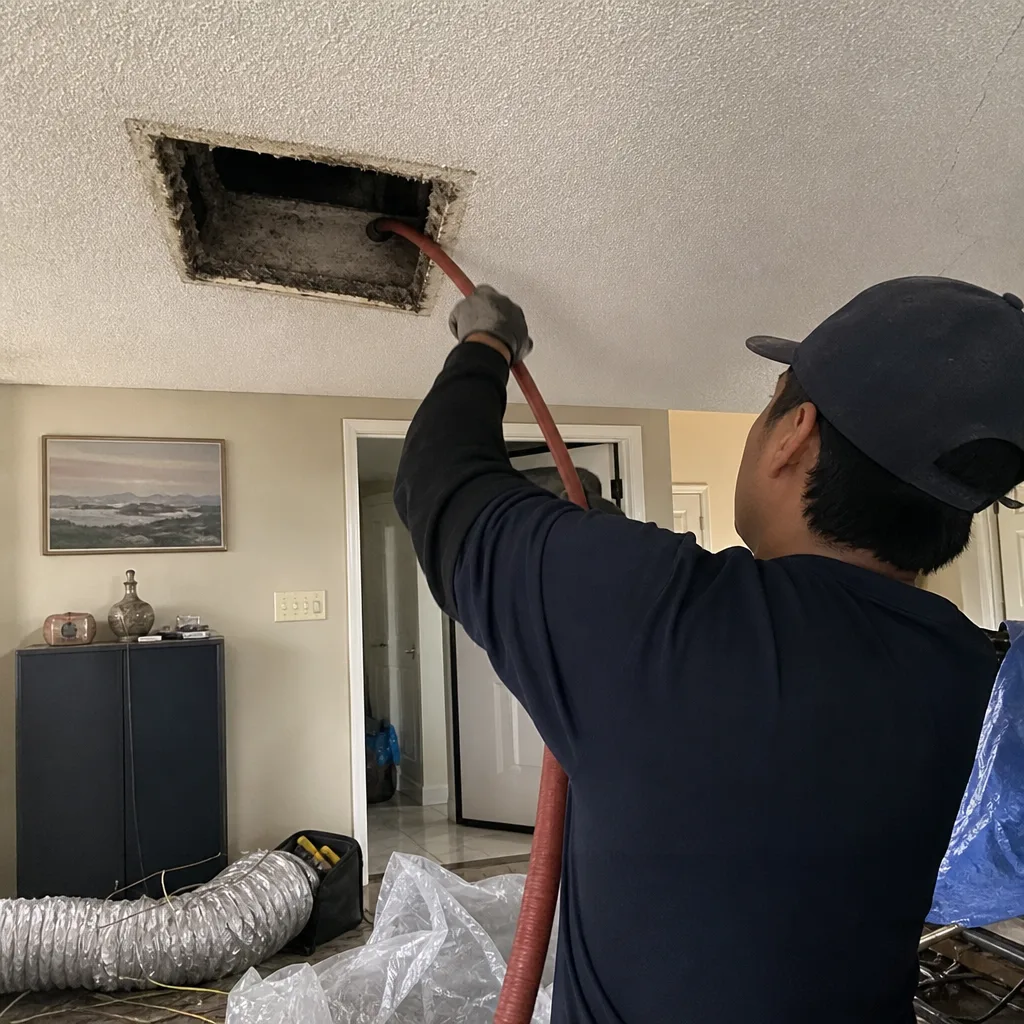 Before
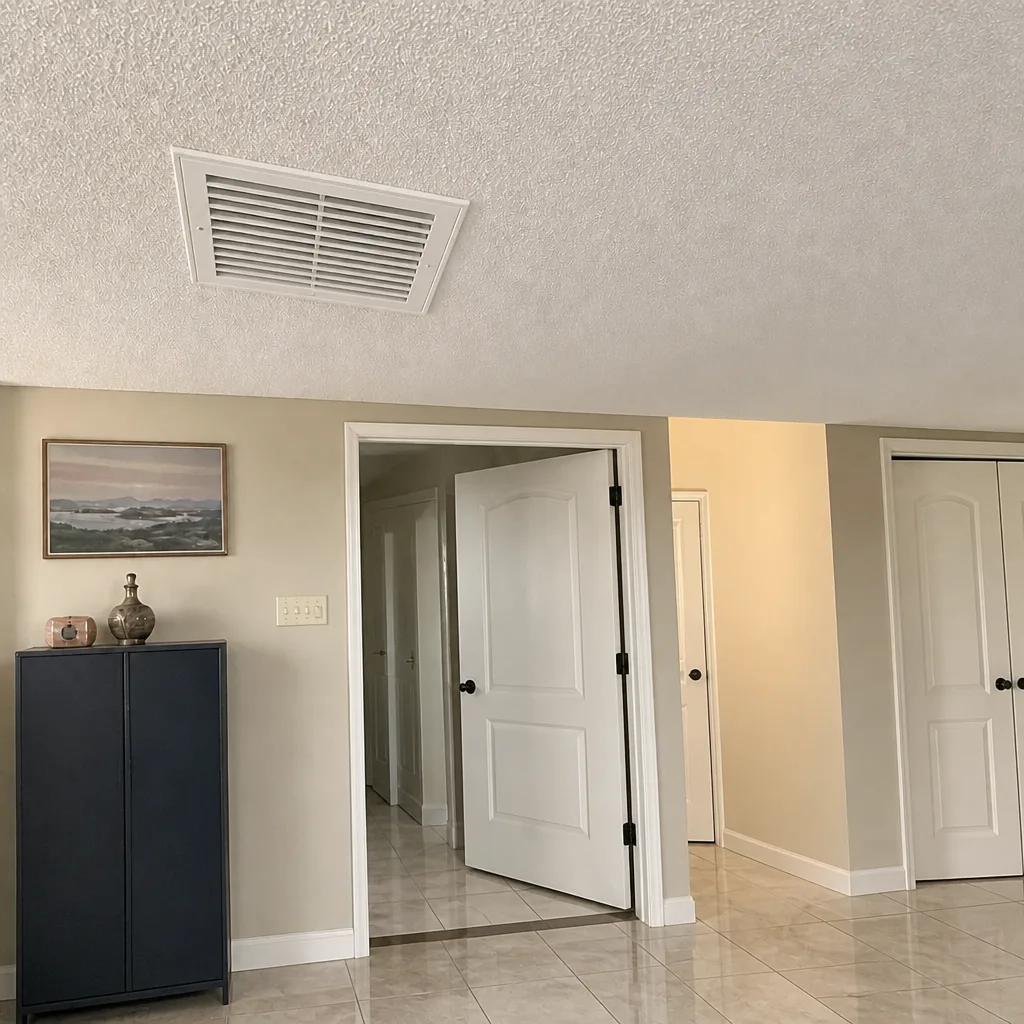 After