
Last updated November 4, 2026
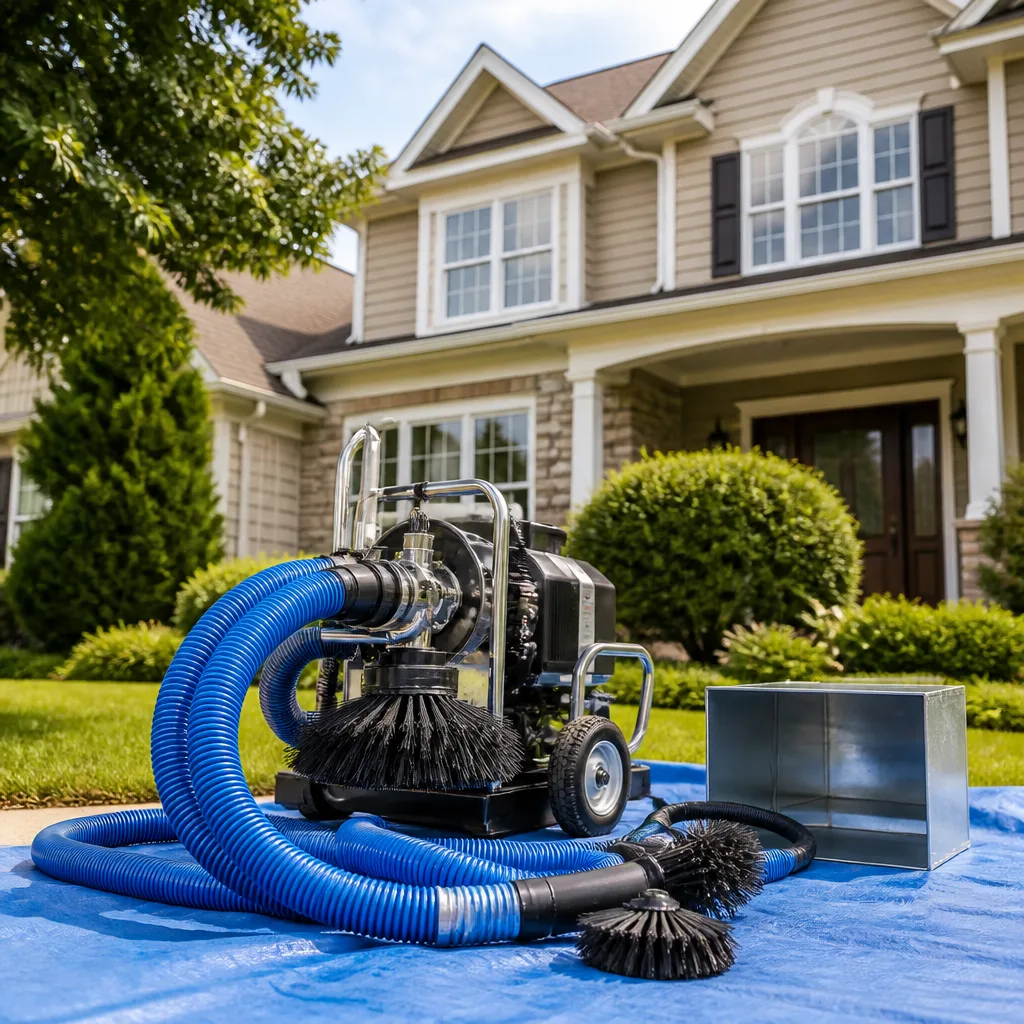 Whole-home duct cleaning
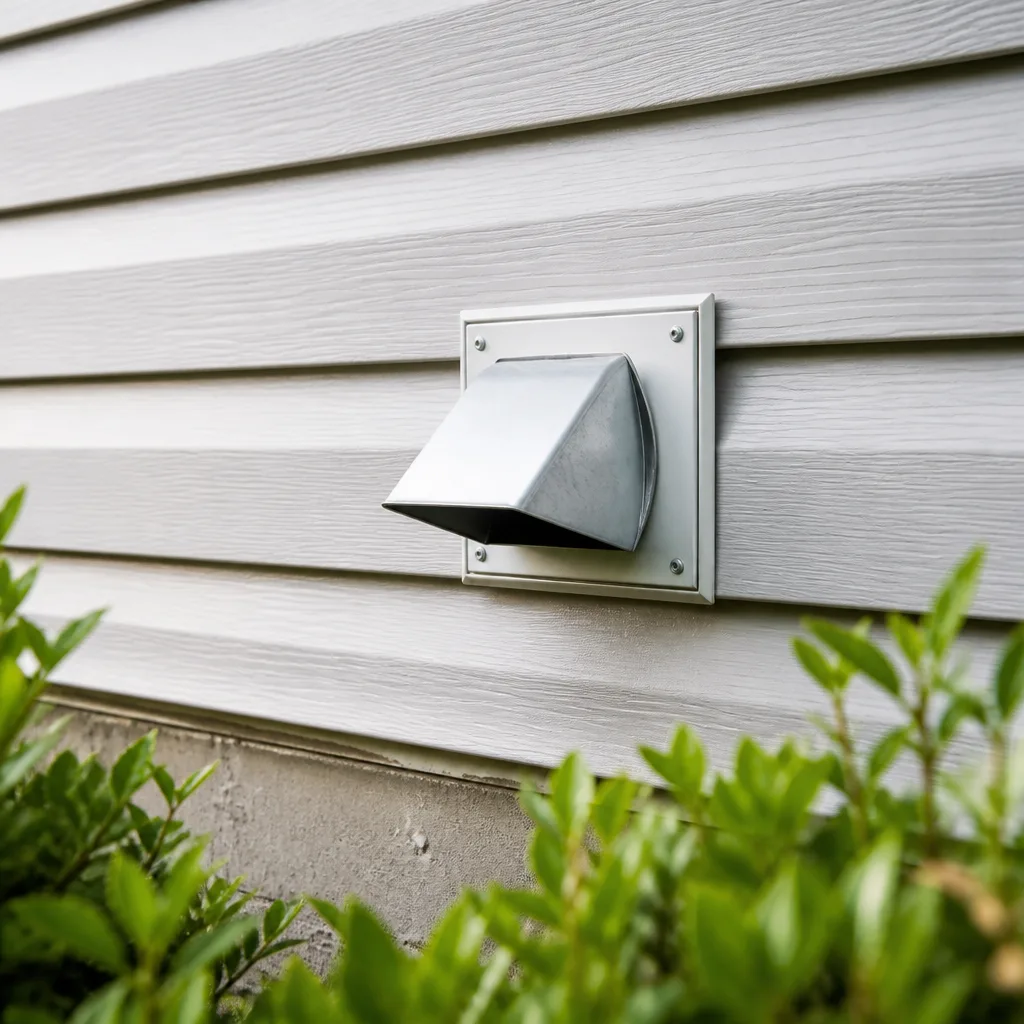 Dryer vent cleaning
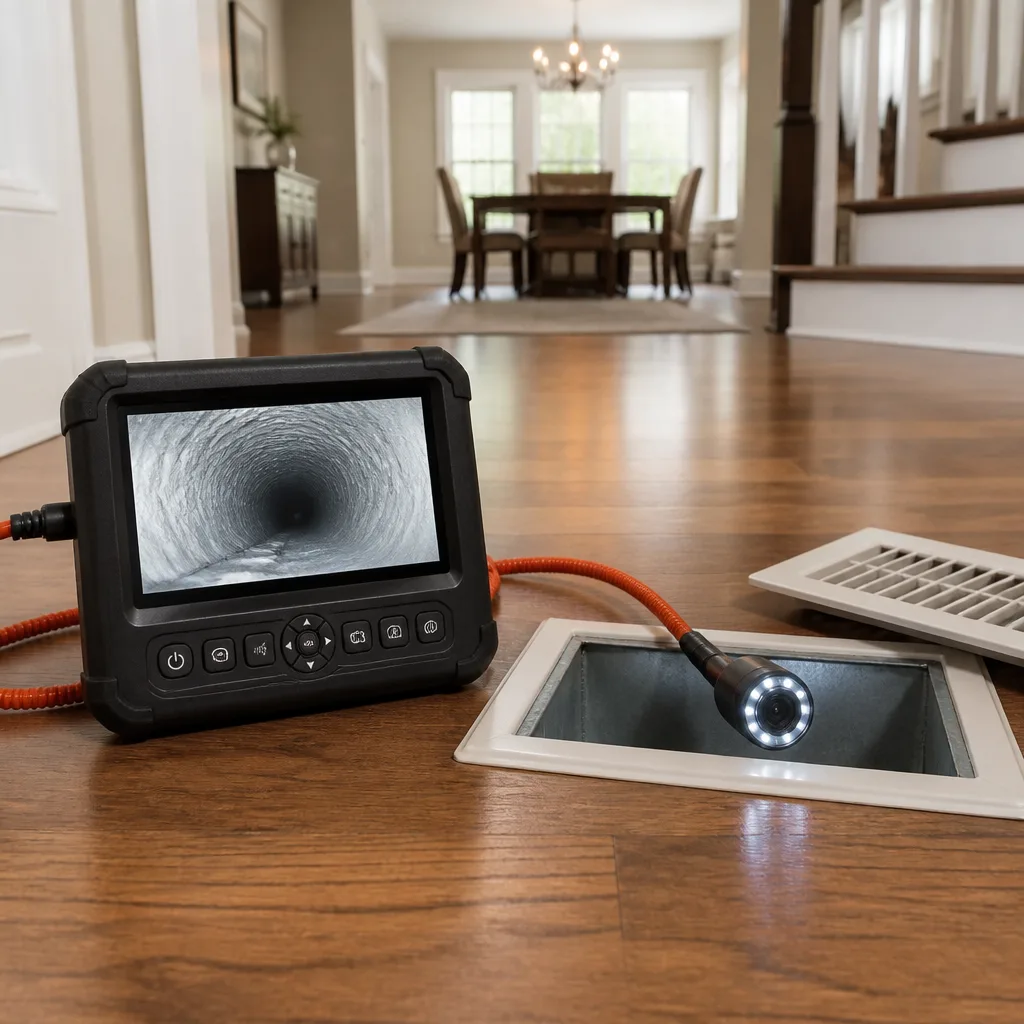 Camera inspection
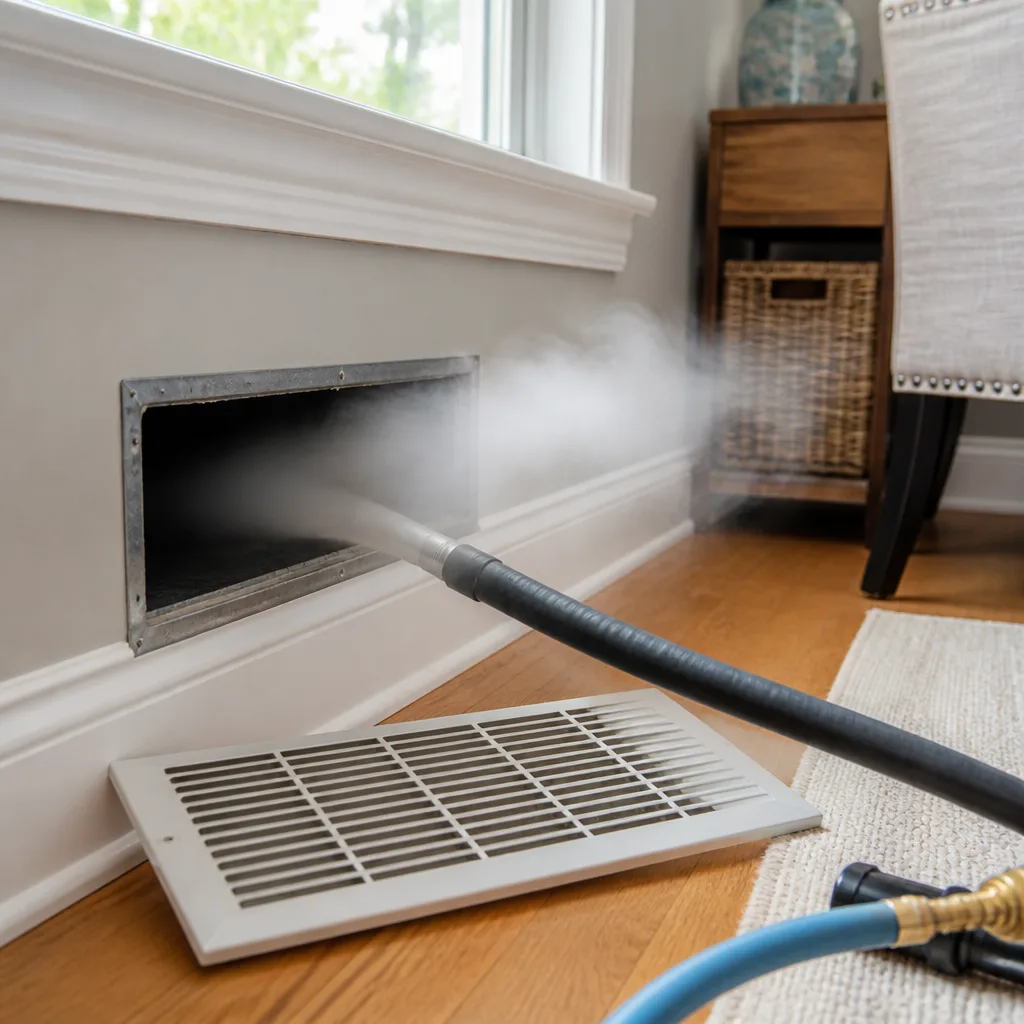 Sanitizing & deodorizing
Whole-system duct and dryer vent check with before-and-after photos - you see exactly what came out of your vents
That "$99 whole-house special" is a bait ad - the real number appears once they are in your hallway, or the "clean" is a shop-vac at the register. We photograph the inside of your ducts before and after instead.
DIY vs Professional Air Duct Cleaning: The Vermont Vista Homeowner’s Decision Guide
A $60 dryer vent cleaning kit from Home Depot is a legitimate tool for a 6-foot straight dryer duct run. It is not a legitimate substitute for a negative-pressure extraction system on a 1,800-square-foot home’s main trunk lines. The gap between those two things is where most DIY duct cleaning advice falls apart, and it is exactly where this guide lives. We wrote this because Vermont Vista homeowners repeatedly ask us the same question: what can I actually do myself, and when am I wasting my weekend on a job that needs equipment I cannot rent or buy at a consumer price? By the end, you will know the precise boundary between maintenance and remediation, which three DIY tasks genuinely help, and which situations demand the kind of machinery found on a professional truck, not in a big-box aisle.
Quick Answer
DIY duct cleaning makes sense for three narrow tasks: cleaning supply registers, replacing your HVAC filter, and clearing a short, straight dryer vent run with a brush kit. It does not make sense for cleaning the main trunk lines and branch ducts of a residential HVAC system, because consumer tools lack the reach, agitation power, and negative-pressure containment to remove embedded debris. For whole-system cleaning, post-renovation debris removal, or any job involving fiberglass-lined ducts, professional air duct cleaning with rotary brush and negative-air equipment is the only method that actually removes what is in there rather than relocating it.
Styles & brands we work with
- Whole-home duct cleaning
- Dryer vent cleaning
- Camera inspection
- Sanitizing & deodorizing
Table of Contents
- What’s Actually in Your Ducts: A Vermont Vista Reality Check
- The Equipment Truth: What Consumer Tools Can and Cannot Do
- Three DIY Tasks That Genuinely Extend Time Between Professional Cleanings
- Fiberglass Duct Liner: The Underreported DIY Risk
- When Professional Equipment Is Not Optional: Four Scenarios
- How to Check If Your Duct Configuration Even Allows Meaningful DIY Access
- The Dryer Vent Distinction: Where DIY Legitimately Wins
What’s Actually in Your Ducts: A Vermont Vista Reality Check
The first step in the DIY versus professional decision is understanding what you are actually up against. Ducts are not just dusty tubes. They are long, dark, low-airflow channels that accumulate a specific blend of material over time. In Vermont Vista, where homes sit in a hot, dry, inland climate, that blend has a particular character. Our air carries fine valley dust and construction particulate from a dense residential grid. Windows stay closed through long stretches of heat, which means the HVAC system recirculates the same indoor air through the same duct interiors for months at a time.
Inside a typical Vermont Vista duct system after several years without cleaning, you will find a stratified layer of material. The top layer tends to be fine household dust: skin cells, fabric fibers, pet dander, tracked-in soil. Below that sits a denser cake of construction debris if the home was ever renovated, or if the ducts predate a roof replacement or interior remodel. In homes with older flex duct, you may also find deteriorated liner material shedding from the inside. The key point: this material is not loose dust sitting politely in the bottom of a pipe. It is adhered to duct walls, packed into corners, and embedded in the fibers of insulated flex runs.
That distinction, adhered versus loose, is the entire DIY argument in one sentence. A shop vacuum attached to a brush can capture loose surface dust. It cannot fracture and extract the adhered layer. That requires mechanical agitation strong enough to break the bond between debris and duct wall, paired with enough negative pressure to carry the dislodged material out of the system rather than pushing it into other rooms. Consumer tools do not produce that combination. Professional equipment does.
The Equipment Truth: What Consumer Tools Can and Cannot Do
Every DIY duct cleaning method boils down to one of three tools: a brush kit on a flexible rod, a shop vacuum, or a leaf blower. Each has a place. Each has a hard ceiling. Understanding those ceilings prevents wasted weekends and, in some cases, actual damage to your system.
Brush kits on flexible rods
These kits, typically sold for dryer vents and occasionally marketed for ducts, consist of a round nylon or poly brush head attached to flexible fiberglass rods that screw together section by section. They connect to a cordless drill. They work. For short, straight runs with a light dust layer, a brush kit will pull out a surprising amount of lint and surface dust. The limitation is reach and rigidity. The rods flex. Over a 10-foot run with two 90-degree elbows, the brush head stops rotating against the duct wall and starts spinning in place. In a residential main trunk line, which runs 20 to 40 feet with multiple takeoffs and transitions, a drill-powered brush kit cannot reach more than the first few feet from each access point. If you only clean the first 3 feet of a 30-foot trunk line, you have not cleaned the system. You have cleaned the opening.
Shop vacuums
A strong wet/dry vac with a long hose and a brush attachment can capture loose dust near registers and returns. That is real, and it is worth doing as part of routine maintenance. But a shop vacuum has no mechanical agitation capability beyond what your arm provides through the hose. You cannot scrub duct walls from 20 feet away with a hose that collapses under suction. Most consumer vac hoses also taper to 1-1/4 or 2-1/2 inches, which means they cover a narrow band inside an 8- or 10-inch duct. The vacuum cleans a stripe, not a surface. And because a shop vac is a positive-pressure system on the exhaust side, it can pull debris out of the duct and blow the fine fraction straight back into the room through the exhaust port unless you run it outside or have a HEPA-rated unit.
Leaf blowers
The leaf blower method, which circulates in certain online forums, involves sealing a blower into one register and blowing debris toward an open return or an exterior vent. This is the single worst DIY duct cleaning idea in circulation. Ducts are not built to handle positive pressure of that volume and velocity. The pressure can separate taped joints, blow apart poorly connected flex runs, and force debris through leaks into wall cavities and attic spaces. Even if it does not damage the ductwork, it does not collect anything. It relocates material from the duct interior to the air in your living space. A leaf blower does not clean a duct system; it aerosolizes it. Do not do this.
Professional systems like Rotobrush and Nikro work on a different principle. A Rotobrush machine combines a rotary brush head, powered by an internal drive system, with a vacuum that runs simultaneously. The brush agitates, the vacuum extracts at the point of contact. A Nikro negative-air unit connects to the trunk line and pulls the entire system into negative pressure while the brush works inside, so any dislodged particulate is drawn toward a single collection point rather than escaping into rooms. This is not a stronger version of what you can buy at Home Depot. It is a different category of tool, built for the dimensions and airflow characteristics of residential HVAC systems. We carry this equipment on every job in Vermont Vista because the homes here, many built in the 1950s through the 1980s, have duct systems with enough length, elbows, and transitions that consumer tools simply cannot reach the full run.
Three DIY Tasks That Genuinely Extend Time Between Professional Cleanings
Here is the useful part. DIY has a legitimate role, and if you focus on these three tasks, you will extend the interval between professional cleanings and improve your air quality year-round without touching a single dangerous or ineffective shortcut.
1. Register and return grille cleaning
Every supply register and return grille in your home is a collection point for dust, hair, and the film of cooking residue and candle wax that makes dust cling. Remove each grille, wash it in warm soapy water, let it dry, and wipe down the visible interior opening with a damp microfiber cloth. Do this every three to six months. This is the fastest, cheapest air quality improvement a Vermont Vista homeowner can make, and it directly reduces the amount of airborne debris that re-enters the duct system through the return side. It also gives you a clean line of sight into the first few inches of each duct run, which helps you spot obvious problems like a disconnected flex section or visible mold growth on the register boot.
2. HVAC filter maintenance
Your filter is the first line of defense, and in a hot climate like Vermont Vista’s, it works hard. Set a reminder to check it monthly during summer peak, and replace it at least every 90 days regardless of season. Homes with pets or a high dust load from nearby construction may need every 60 days. The filter protects the blower motor and the coil, but it also controls how much particulate enters the return side of the duct system. A clogged filter forces the blower to work harder and allows bypass air to carry unfiltered dust into the supply ducts. Choose the highest MERV rating your system’s airflow specs will tolerate, and if you are unsure, go with the manufacturer’s recommendation. This is not the place to improvise with a higher-MERV filter than the system is designed for; restricted airflow causes its own set of problems.
3. Short, straight dryer vent runs
If your dryer is on an exterior wall and the vent run is 6 feet or less with no more than one gentle elbow, a brush kit with a drill is a legitimate tool. This is the one place where consumer equipment can match a professional result, because the run is short, the material is mostly loose lint, and the access is direct. We will cover this in more detail below in the dryer vent section. For now, the rule is simple: short and straight, yes. Long, flexible, or interior-routed, no.
These three tasks are the entire DIY toolkit that we recommend. Everything else in the duct system requires access, reach, and extraction power that consumer tools do not have. The good news is that these three tasks, done consistently, genuinely reduce the frequency with which you need a full professional cleaning. They do not replace it.
Fiberglass Duct Liner: The Underreported DIY Risk
Here is where the DIY conversation shifts from “ineffective” to “potentially harmful.” Many Vermont Vista homes, particularly those built before the 1990s or upgraded with insulated plenums, have internal fiberglass duct liner. This liner was installed to reduce noise transmission and provide thermal insulation inside the duct. It works for those purposes. It also creates a surface that reacts badly to the wrong cleaning method.
Fiberglass duct liner is a mat of glass fibers bonded to the interior of sheet metal ducts. Over time, the bonding agent degrades, especially in hot, dry climates like Vermont Vista’s, where temperature cycling accelerates material fatigue. The surface becomes friable, meaning it can release fibers into the airstream when disturbed. This is not a theoretical concern; it is the reason professional duct cleaning standards call for specific handling protocols around lined ducts.
The DIY problem is this: a rotating brush, particularly a nylon brush on a drill rod spinning at high speed, can shred the surface of aging fiberglass liner. What was loosely bonded becomes airborne. The brush does not capture those fibers; it liberates them. Your shop vacuum, if it is not a sealed HEPA system, may capture the large fraction while exhausting the small fraction directly into the living space through the vac’s air outlet. You have just turned a contained layer of deteriorating liner into a room full of fine glass particulate. That is worse than the condition you started with.
Professional cleaning of fiberglass-lined ducts requires lower-agitation methods, careful inspection of liner condition before work begins, and negative-air containment that captures everything the cleaning process releases. If the liner has deteriorated beyond the point where cleaning is safe, the correct professional response is liner encapsulation or replacement, not aggressive brushing. We see this often enough in Vermont Vista’s older housing stock that it is one of the first things our technicians evaluate before any cleaning begins. If your home has fiberglass-lined ducts and you are considering DIY cleaning, do not. The risk is not that you fail to clean; the risk is that you succeed in releasing something that should have stayed put.
When Professional Equipment Is Not Optional: Four Scenarios
There are situations where the DIY versus professional question is not really a question. These four scenarios demand equipment that creates proper containment, reach, and extraction, and none of that equipment is available at a consumer price point or rental counter.
1. Post-renovation debris
If you have recently completed a remodel, re-roofed, replaced windows, or done any work that required cutting into walls or ceilings, your ducts have debris in them that no consumer tool can remove. Drywall dust is the worst of it. It is fine enough to travel through the entire system, dense enough to pack into corners and transitions, and alkaline enough to irritate airways when it becomes airborne. It also bonds to the thin film of oil and dust already on duct walls, creating a layer that requires mechanical agitation to break. A shop vac cannot do this. A brush kit cannot reach it. Professional rotary brush equipment, like our Rotobrush system, applies direct mechanical contact along the full length of the duct run while a high-volume vacuum extracts the dislodged material at the brush head. This is the only method that removes post-renovation dust rather than pushing it around.
2. Mold or microbial growth
If you see visible mold growth on a register boot, a duct wall within sight, or the inside of a return plenum, DIY is not an option. Mold remediation in duct systems requires containment, proper removal of affected materials where necessary, and treatment with approved antimicrobial products. Attempting to clean visible mold with consumer tools spreads spores throughout the home and does not address the moisture condition that caused the growth. Vermont Vista’s dry climate limits some mold pressure, but condensation on ducts in unconditioned spaces, a leaking coil, or a poorly vented bathroom fan can create localized growth even here. If you see it, stop, call a professional, and do not run the HVAC fan until the situation is assessed. This is an indoor air quality issue, not a cleaning task.
3. Heavily insulated or long flex duct systems
Flexible duct, especially the insulated type with an inner liner wrapped in fiberglass and a foil vapor barrier, is common in Vermont Vista’s tract housing and in retrofit installations. Flex duct is fragile. Its inner liner is a thin plastic or foil film that tears easily under abrasion. A consumer brush kit spinning inside flex duct is a damage risk, not a cleaning solution. If the liner tears, the system pulls insulation particles into the airflow, and the flex run becomes a source of contamination rather than a passageway. Professional cleaning of flex systems requires careful handling, inspection of liner integrity before work begins, and controlled brush speeds selected for the duct material. In many cases, heavily deteriorated flex runs are better replaced than cleaned, which is the kind of determination that requires Rivermark Air Duct Cleaning or another professional to make on site. We include air duct repair as a core service precisely because so many Vermont Vista systems reach the point where cleaning alone is not the right answer.
4. Duct systems over 15 years old with unknown maintenance history
If you bought a home in Vermont Vista and the previous owner cannot tell you when the ducts were last cleaned, or if the home has visible dust emitting from registers when the system starts, the accumulated debris load has likely exceeded anything a DIY approach can address. A 15-year-old duct system with no cleaning history has adhered debris throughout the trunk and branch runs. The material is packed into transitions, coating the inside of returns, and possibly restricting airflow at the filter. This is not a job for a brush on a drill. It is a full-system mechanical cleaning, and it is worth doing right the first time.
How to Check If Your Duct Configuration Even Allows Meaningful DIY Access
Before you buy any tools, walk through your home and answer three questions. These will tell you whether DIY access is even possible before you spend a dollar.
- Where are your registers and returns located? Count them. A typical Vermont Vista home has 8 to 14 supply registers and 1 to 3 large return grilles. Each supply register gives you access to roughly 2 to 3 feet of branch duct before the first elbow or transition. That means register-level DIY cleaning, even done thoroughly, covers perhaps 10% to 15% of the total duct interior length. The main trunk line, where most of the air actually moves, is not accessible from any register. It runs through the attic or between floors, and the only access points are at the plenum and takeoff junctions, which require cutting access or using existing HVAC service panels in most cases.
- Is your ductwork metal or flex? If you have rigid sheet metal ducts, the interior is more durable and can tolerate more aggressive cleaning methods. If you have flex duct, which is common in Vermont Vista homes built after the early 1980s, the liner is fragile, and consumer brush tools pose a real damage risk. You can identify flex duct by looking at the visible sections in your attic or wherever ducts are exposed; flex looks like an accordion-wrapped tube with a foil or plastic exterior, while metal is smooth and rigid.
- Do you have a single return or multiple returns? Homes with a single central return create more negative pressure on that return drop and more dust loading in that location. Homes with multiple returns spread the accumulation more evenly. Either way, the return side of the system is nearly impossible to clean from the register opening alone, because the return drop into the blower compartment is typically a straight vertical run that a flexible brush cannot navigate effectively.
If the answer to any of these questions suggests you cannot reach the majority of your duct interior, you have your answer. The job is not a DIY job. The equipment simply cannot get to where the material actually is.
The Dryer Vent Distinction: Where DIY Legitimately Wins
We want to be fair to the DIY case, because there is one place where it genuinely works, and we recommend it. A dryer vent run of 6 feet or less, straight or with one gentle elbow, with the dryer against an exterior wall, is a job a homeowner can do with a brush kit and a drill in under 30 minutes. The lint is loose, the run is short, and the brush reaches everything. Do this every 6 to 12 months, and you are doing real maintenance.
The problem is that most Vermont Vista dryer vent runs do not look like that. Laundry rooms are often in interior locations, which means the vent run extends 15, 20, or 30 feet through walls, floors, or ceilings to reach an exterior termination. Those runs have multiple elbows, and lint accumulates at every turn. A DIY brush from a Home Depot kit will clean the first few feet from the dryer connection, and perhaps a few feet from the exterior termination if you can reach it, but the middle of the run remains packed. That is the fire hazard section, because lint ignites where it accumulates at bends and restrictions, not where the duct is straight.
This is why dryer vent cleaning is a dedicated service on our truck, not an add-on afterthought. The equipment needed for a long run is a powered rotary brush on a flexible drive shaft, run the full length of the duct, combined with a high-volume vacuum at the termination point. That is the same principle as a professional duct cleaning system, scaled for the smaller diameter and higher lint load of a dryer vent. If your vent run is short and straight, buy the $60 kit and do it yourself. If it disappears into the wall and does not come out for 20 feet, call a professional. Dryer vent fires are a real, preventable, and all-too-common event, and the line between prevention and risk is drawn exactly where the duct leaves your immediate reach.
Common Mistakes to Avoid
- Using a leaf blower to “clean” ducts. This is the most damaging DIY approach in circulation. The positive pressure separates joints, damages flex liner, and disperses debris throughout the home rather than collecting it. If someone suggests it, ignore them.
- Running a shop vac without a HEPA filter or exhaust control. Standard shop vacuums exhaust fine particulate back into the room. You end up cleaning the ducts by distributing the contents through your living space. If you are going to vacuum, run the exhaust outside or use a sealed unit.
- Brushing fiberglass-lined ducts. Aggressive brushing of friable duct liner releases glass fibers into the airstream. If your home has fiberglass-lined ducts, especially older ones in Vermont Vista’s vintage housing stock, do not touch them with a rotating brush.
- Believing a “duct cleaning” service that quotes $99 for the whole house. A whole-system professional cleaning requires equipment, time, and trained labor. A $99 quote is a bait price, and it typically means the crew will spend 30 minutes vacuuming register openings and leave the trunk lines untouched. This industry has a bait-and-switch problem, and the low price is the tell.
- Cleaning ducts without fixing the underlying duct damage. If your ducts have disconnected sections, collapsed flex lines, or leaking joints, cleaning them is cosmetic. The system will pull attic air, wall-cavity air, or crawlspace air into the supply stream immediately after cleaning. The repair has to happen first or alongside.
- Using a high-MERV filter the system was not designed for. Higher MERV ratings mean more airflow resistance. Installing a MERV 13 filter in a system designed for MERV 8 can starve the blower, reduce system efficiency, and in extreme cases cause the coil to freeze. Match the filter to the equipment specs.
- Neglecting the return side. Most DIY effort goes to supply registers. The return side is where the bulk of the dust enters the system. Cleaning supply registers while ignoring the return drop is like cleaning the exit of a river without cleaning the source.
See the difference
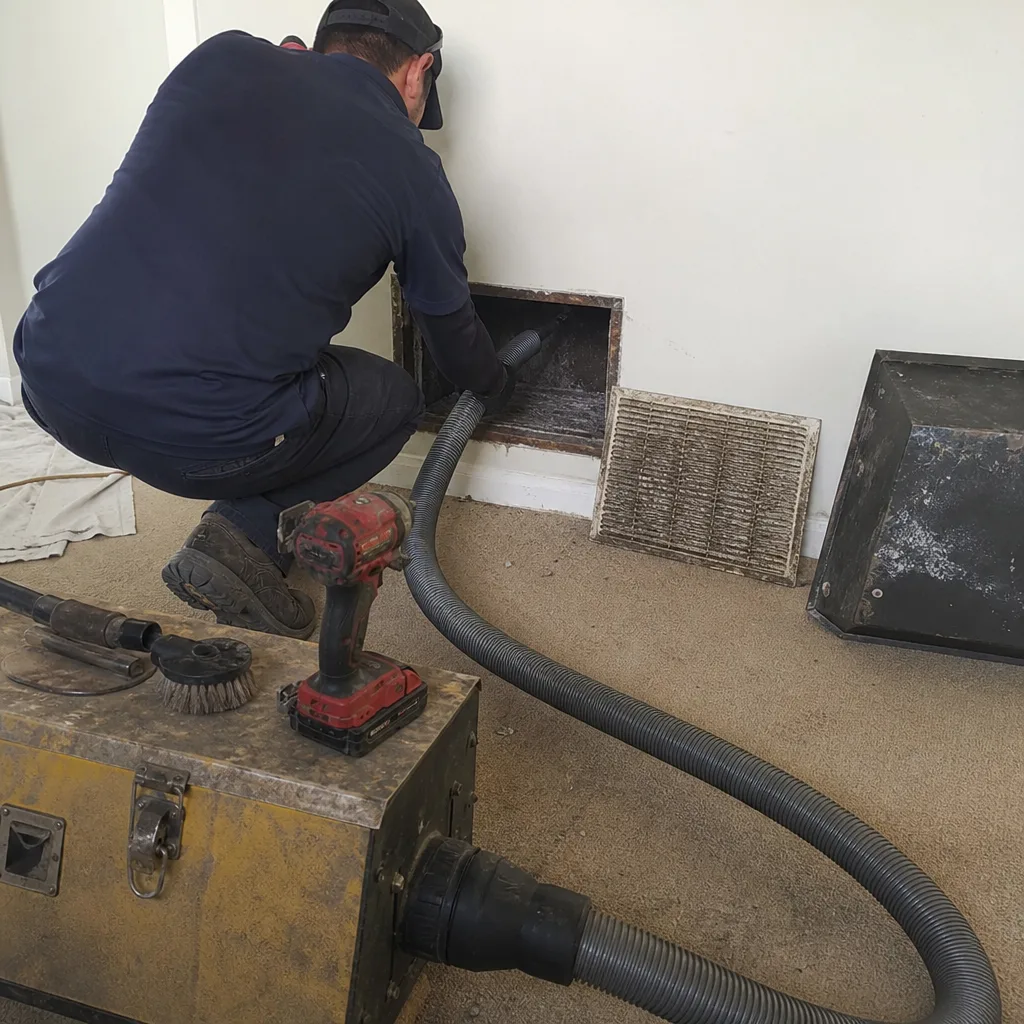 Before
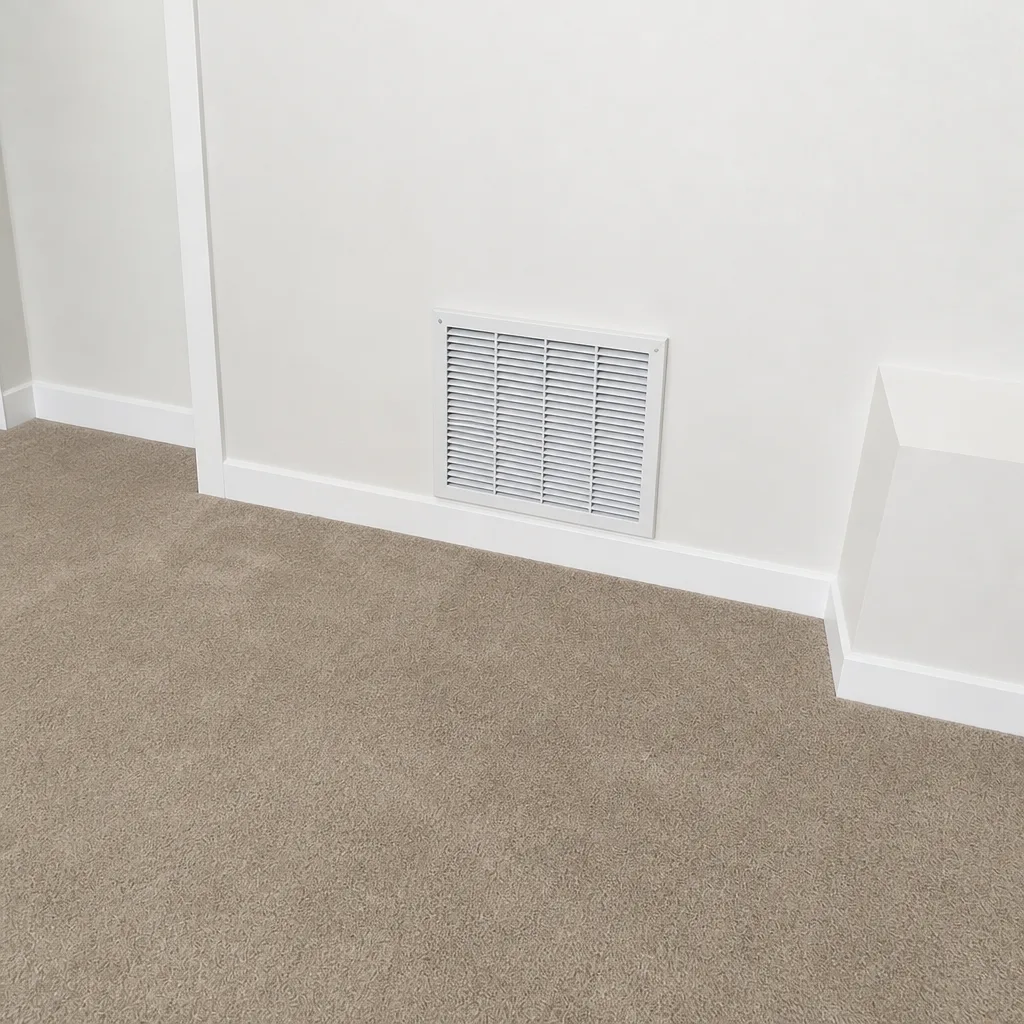 After
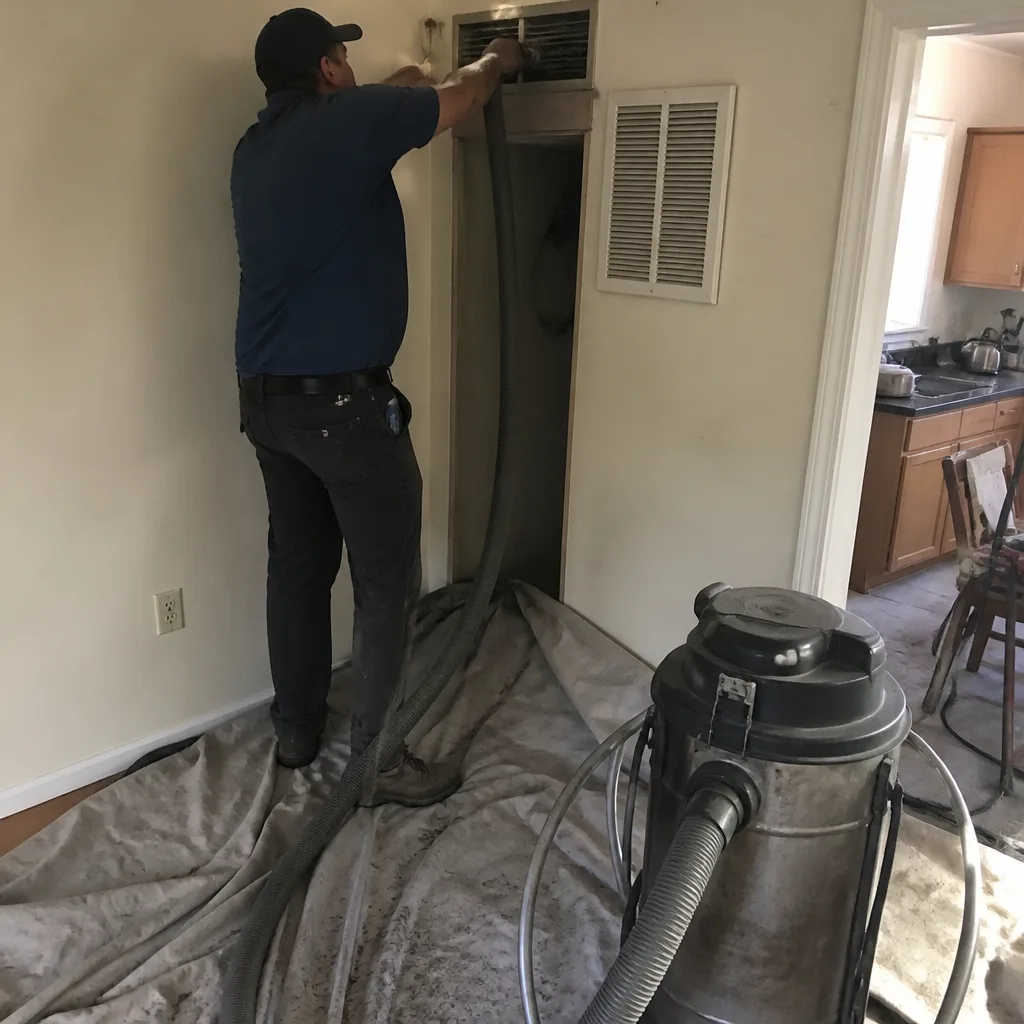 Before
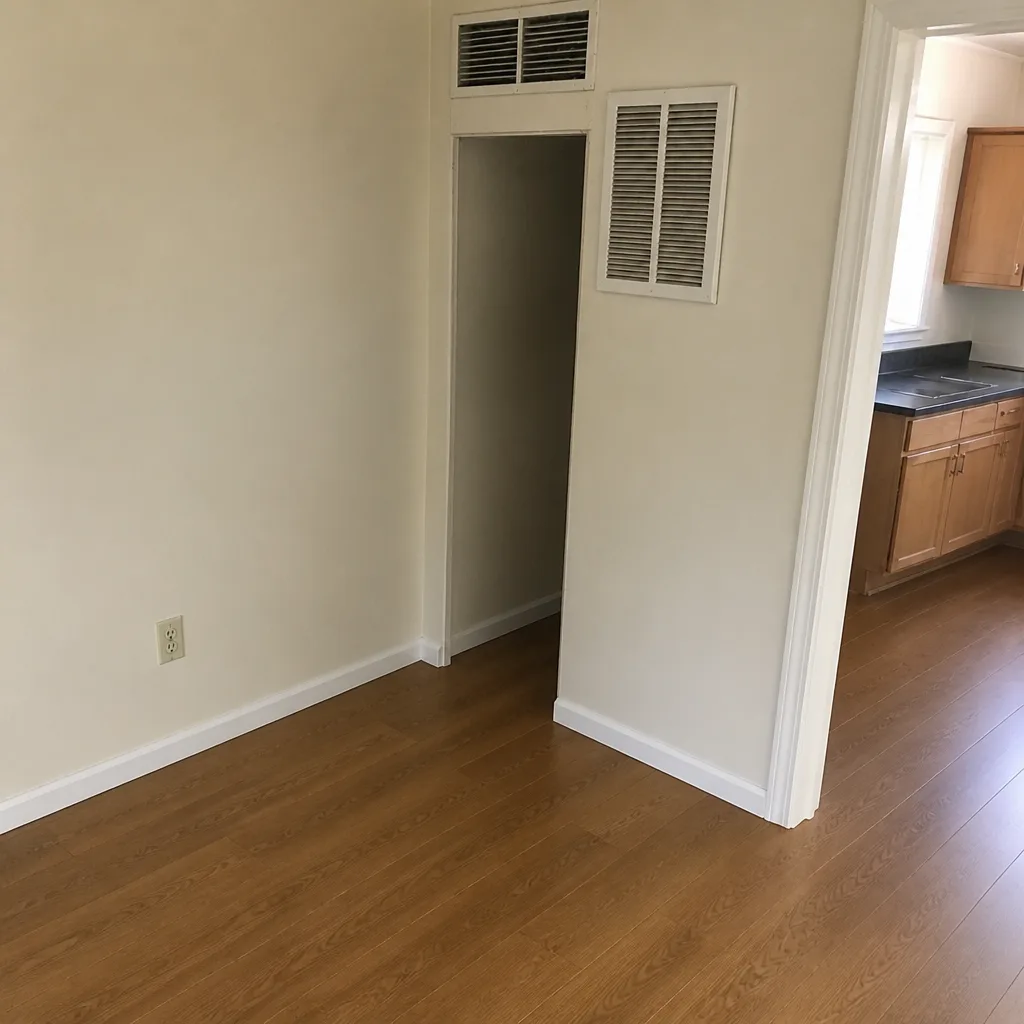 After
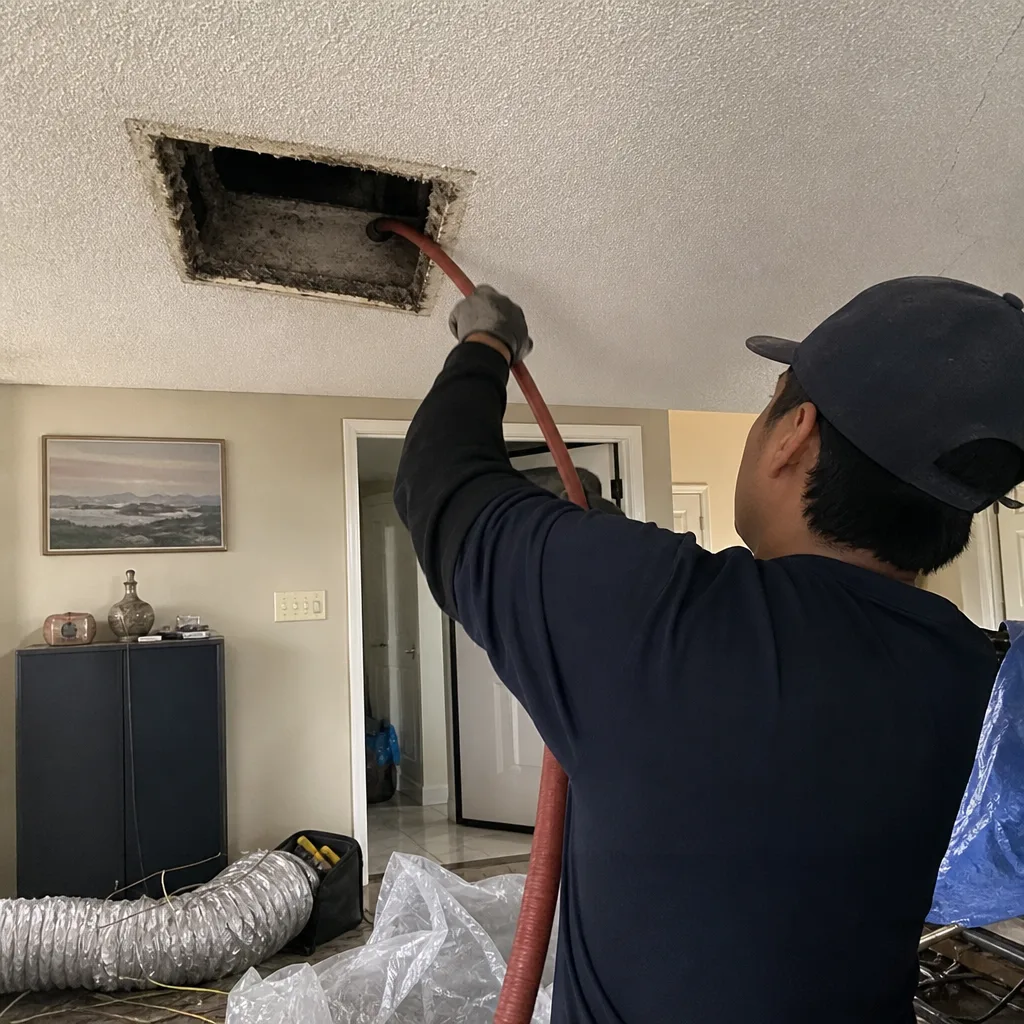 Before
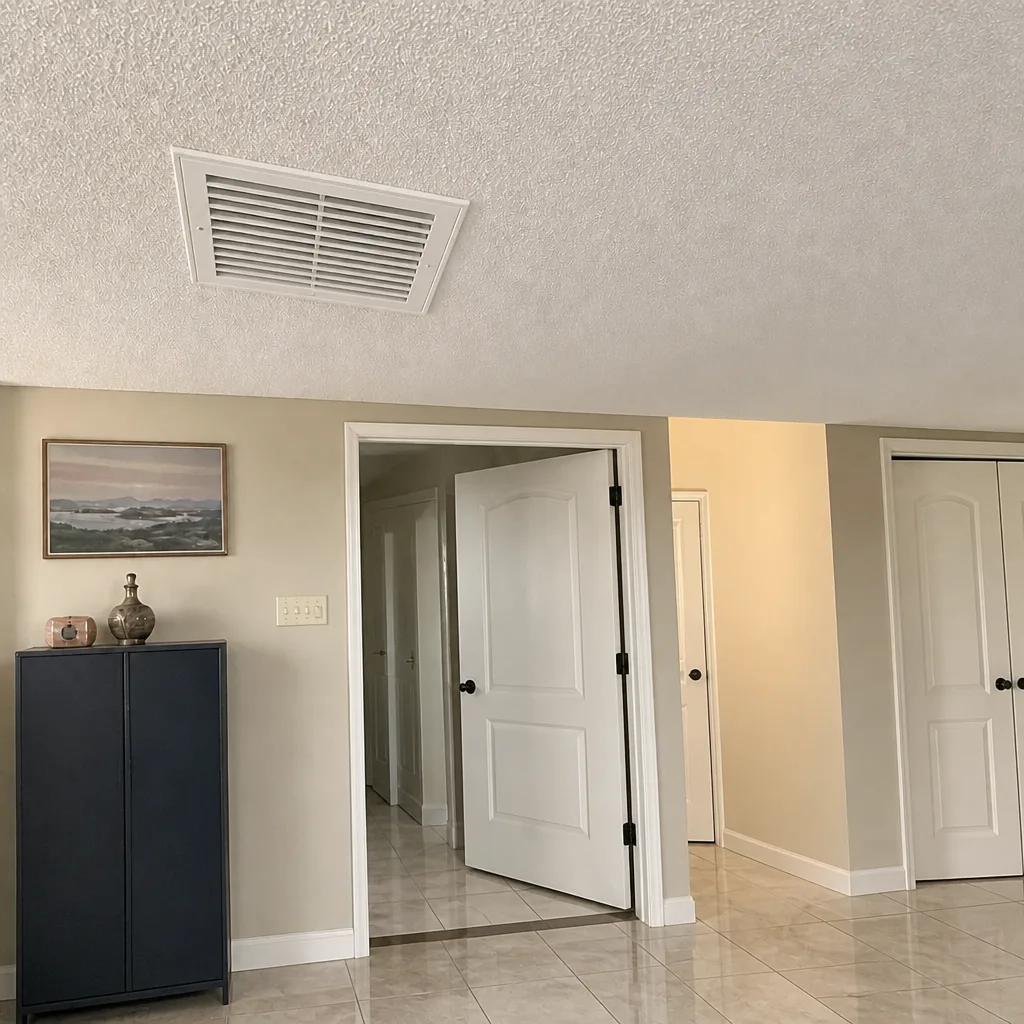 After
When to Call a Professional
Call a professional when the job requires reach you do not have, extraction power you cannot buy, or care for materials that cannot tolerate consumer tools. That means post-renovation dust packed into a full trunk line, visible mold on any duct surface, fiberglass liner in an aging system, flex duct runs longer than a few feet, dryer vents that disappear into walls, and any duct system over 15 years old with no maintenance history. It also means any situation where the ducts are damaged or disconnected, because cleaning damaged ducts without repairing them is wasted effort. Rivermark Air Duct Cleaning offers free estimates in Vermont Vista, and we bring the same professional equipment to every inspection, including the same Nikro negative-air units and Rotobrush systems we use on full cleanings. Call (833) 620-6973. We answer 24/7. Fast dispatch from 7am to 7pm, Sunday through Friday.
Frequently Asked Questions
You can clean the register openings and the first few feet of branch duct from each register, but you cannot reach the main trunk lines or the majority of the duct interior with consumer tools. A shop vacuum and brush kit lack the reach, agitation, and extraction power to remove adhered debris from a full residential duct system. The result is a partial cleaning that leaves the most important surfaces untouched.
Professional whole-system duct cleaning in Vermont Vista typically runs several hundred dollars depending on the size of the system, the number of returns, the accessibility of the ductwork, and the condition of the ducts. A written estimate after an on-site inspection is the only way to get an accurate number for your home. Avoid any quote that sounds too low; it almost certainly is not a full-system cleaning. Call (833) 620-6973 for a free estimate.
The safest and most effective DIY tasks are cleaning your supply registers and return grilles, replacing your HVAC filter on schedule, and cleaning a short, straight dryer vent run with a brush kit. These three tasks genuinely reduce the dust load entering and circulating in your system, and they require no specialized equipment or risk to your ductwork.
No. Fiberglass duct liner, especially in older systems, can become friable and release glass fibers when agitated. Consumer brush tools spinning at high speed can shred the liner surface and send fibers into the air. Professional cleaning of lined ducts requires lower-agitation methods, inspection of liner condition, and negative-air containment. If your home has fiberglass-lined ducts, leave them to a professional.
Most homes benefit from professional duct cleaning every 3 to 5 years, though the interval varies with pets, renovation history, occupancy, and filter discipline. Homes with heavy dust accumulation, recent construction, or occupants with respiratory sensitivities may need more frequent cleaning. Visible dust emitting from registers when the system starts is a clear sign the interval has arrived.
The difference is category, not degree. Consumer tools are designed for short, straight runs and loose surface dust. Professional systems like Rotobrush combine powered rotary brushing with simultaneous high-volume vacuum extraction at the point of contact, while Nikro negative-air equipment pulls the entire system into contained negative pressure so dislodged debris is drawn to a collection point rather than released into the home. Professional equipment reaches the full length of trunk and branch runs, handles flex duct without damaging the liner, and extracts what it dislodges.
The Bottom Line
The DIY versus professional air duct cleaning decision comes down to two things: what you can reach, and what your duct material can tolerate. You can reach registers, returns, filters, and short dryer vent runs. You cannot reach main trunk lines, long flex runs, return drops, or the interior surfaces where adhered debris actually lives. Consumer tools cannot agitate and extract simultaneously, which means they leave material in place or relocate it. Professional equipment exists to solve exactly that problem, which is why the capability boundary is so clean. Do the three DIY tasks that genuinely work. Call a professional for everything else. Your air, and your ducts, will be better for the honesty.
Written by the team at Rivermark Air Duct Cleaning, serving Vermont Vista since 2014.