
Last updated November 4, 2026
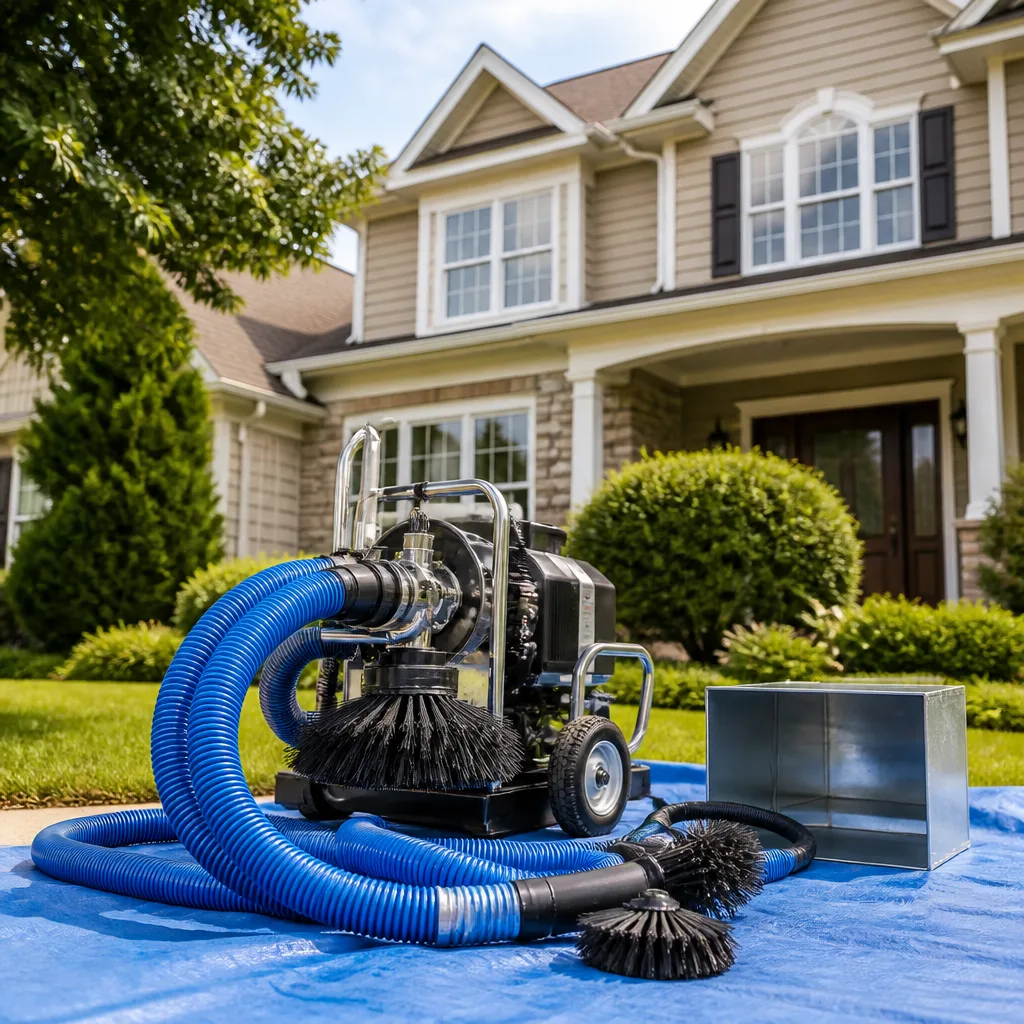 Whole-home duct cleaning
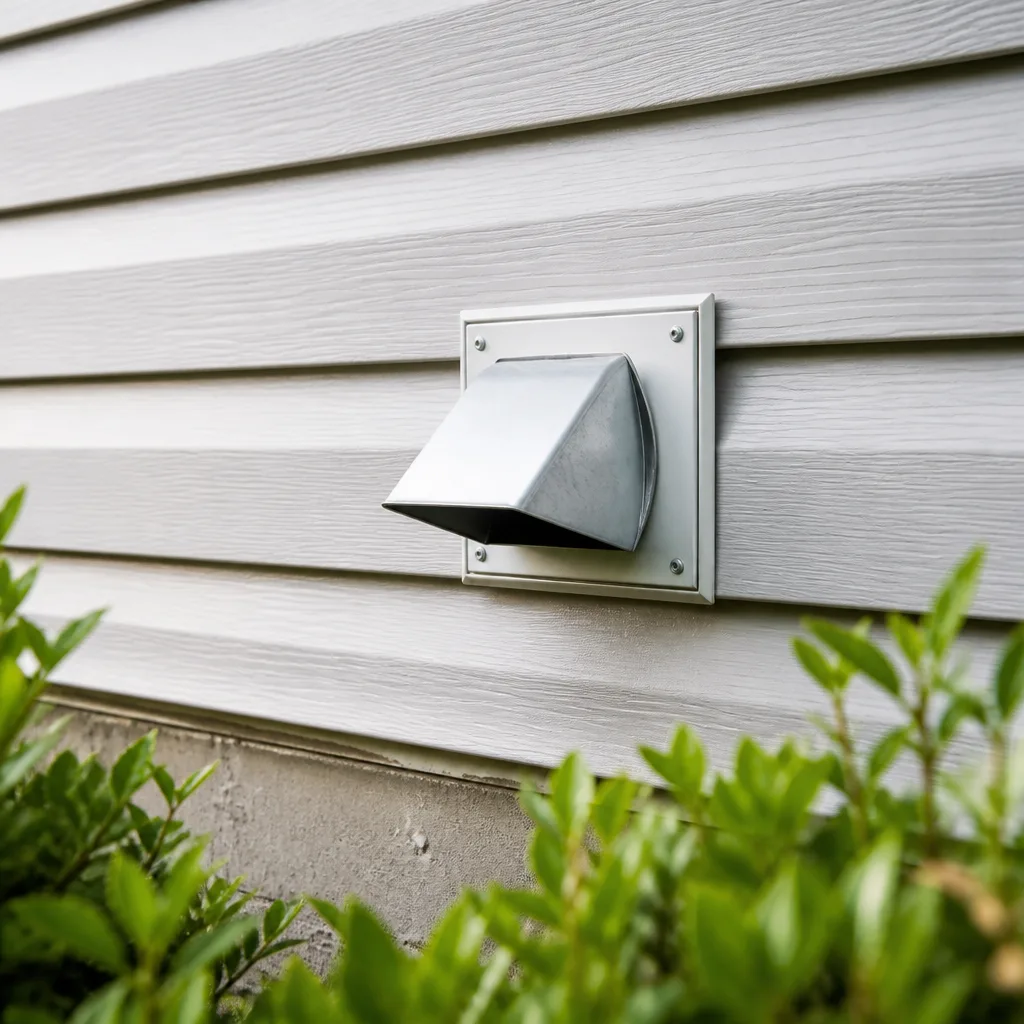 Dryer vent cleaning
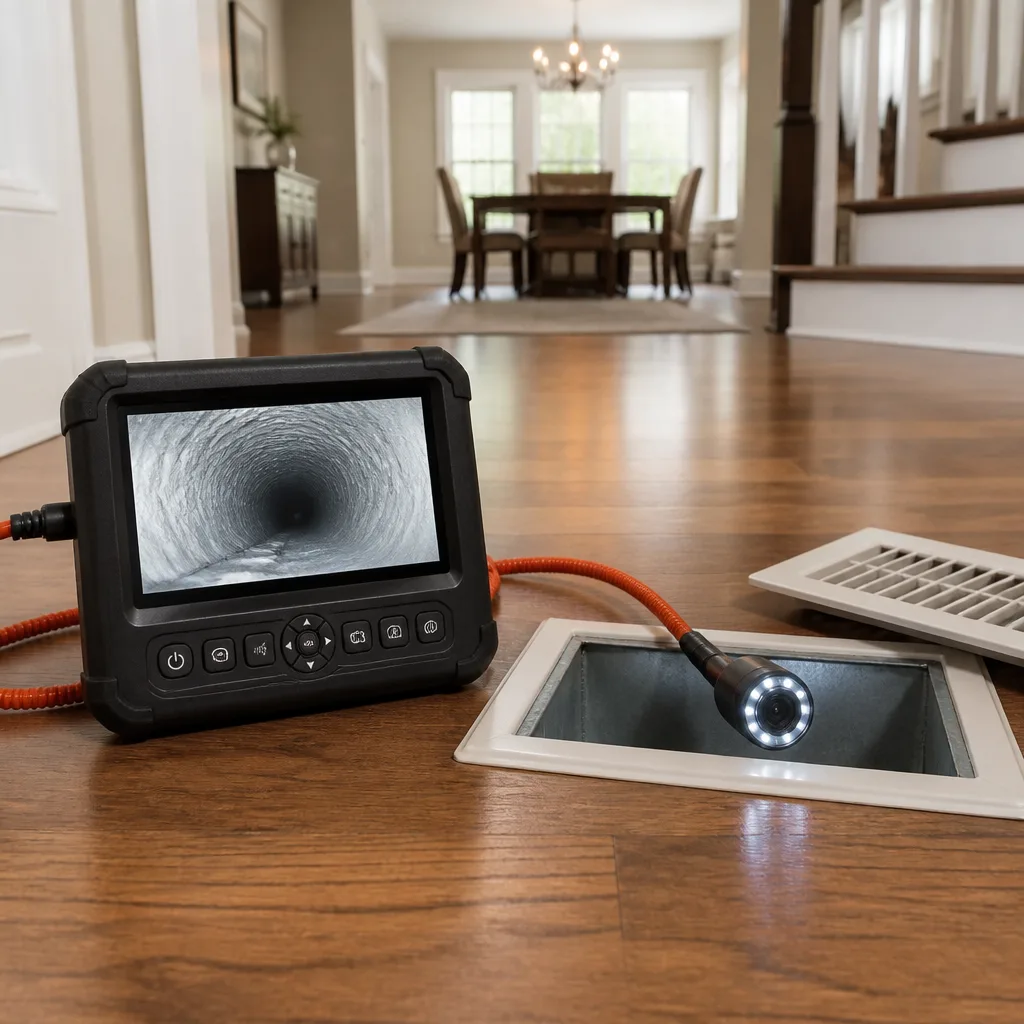 Camera inspection
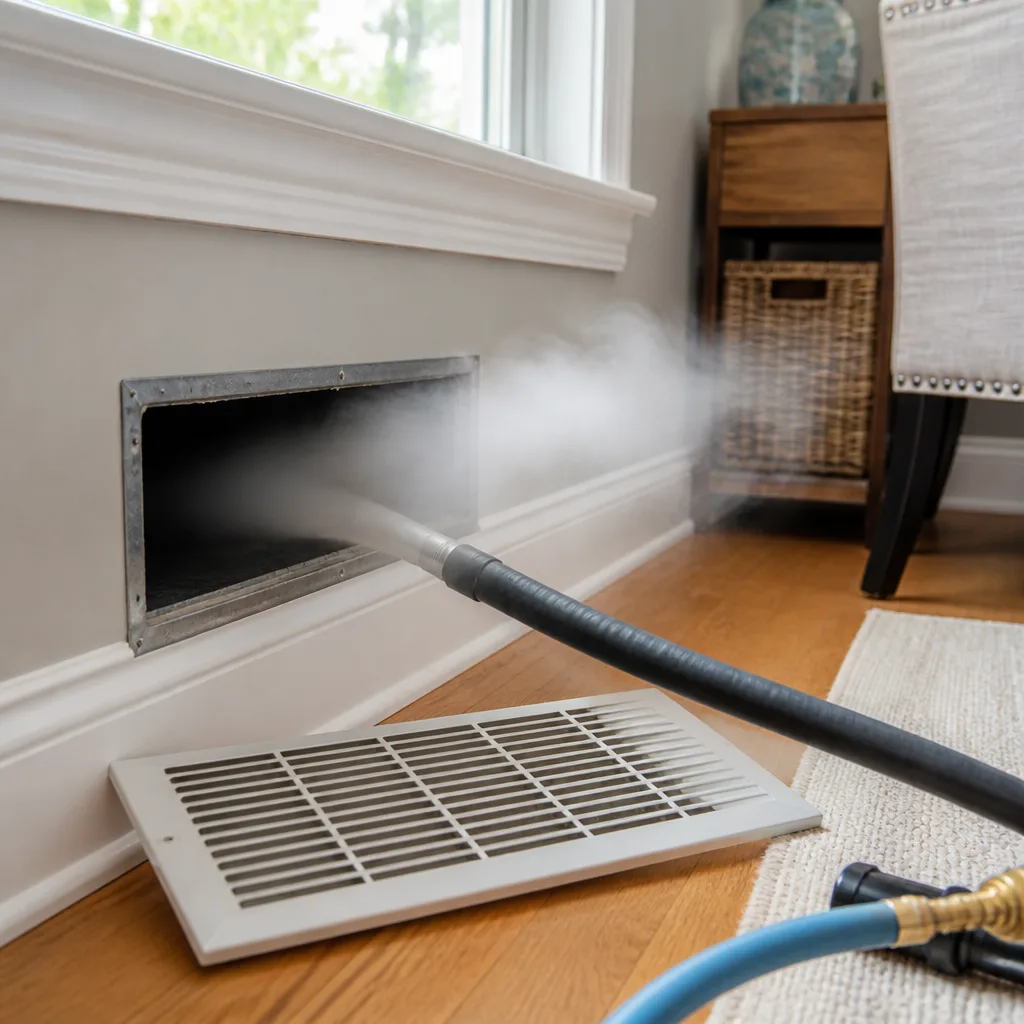 Sanitizing & deodorizing
Whole-system duct and dryer vent check with before-and-after photos - you see exactly what came out of your vents
That "$99 whole-house special" is a bait ad - the real number appears once they are in your hallway, or the "clean" is a shop-vac at the register. We photograph the inside of your ducts before and after instead.
The Complete Guide to Air Duct Cleaning in Vermont Vista
Most Vermont Vista homeowners think air duct cleaning is one service with one outcome: someone hooks a vacuum to a vent and charges for the visit. That’s the misconception that costs people real money. What actually separates a cleaning that changes your indoor air from one that just stirs dust around is the diagnostic work done before any equipment enters the duct. This guide maps the full scope of a legitimate cleaning in Vermont Vista – from the initial inspection to post-job verification – so you can tell the difference between thorough source removal and a blow-and-go that leaves the problem hiding behind your walls.
Quick Answer
Air duct cleaning in Vermont Vista is a diagnostic process as much as a physical cleaning. A complete job includes inspecting the full duct system, mechanically agitating debris with rotary brush equipment, extracting it under negative air pressure, and verifying the result with before-and-after documentation. Skipping the inspection phase is why many cleanings fail to improve air quality, and Vermont Vista’s dry heat and wildfire particulate make that gap more visible than in coastal California markets.
Styles & brands we work with
- Whole-home duct cleaning
- Dryer vent cleaning
- Camera inspection
- Sanitizing & deodorizing
Table of Contents
- What Actually Gets Cleaned (and What Budget Crews Skip)
- Why Vermont Vista’s Climate Changes How Ducts Get Dirty
- Source Removal vs. Blow-and-Go: The NADCA Standard Explained
- What Rotobrush and Nikro Actually Do Inside a Duct
- How to Verify a Cleaning Was Done Correctly
- Air Duct Repair: Why Cleaning Sometimes Isn’t Enough
- Dryer Vent Cleaning: A Separate Fire-Safety Service
- What Air Duct Cleaning Costs in Vermont Vista
What Actually Gets Cleaned (and What Budget Crews Skip)
A full-scope air duct cleaning covers the entire return and supply network, not just the registers you can see in your floors and ceilings. In a Vermont Vista single-family home, that means the return ducts pulling air toward the air handler, the supply ducts pushing conditioned air back out, the plenum boxes above and below the air handler, the air handler compartment itself, and the interior surfaces of the blower fan and evaporator coil housing.
What budget crews often skip is the part of the system you cannot see without opening panels. Access panels need to be cut or unscrewed where the duct connects to the air handler, because that junction is where the thickest accumulation usually sits. A crew that never opens the air handler compartment can clean the branch ducts all day and still leave the system’s core coated in the same dust that was there before. In our experience, the junction between return duct and air handler is the single most overlooked location in Vermont Vista homes – especially in older residences where decades of air movement have packed debris against the evaporator side.
A complete cleaning should include:
- Return ducts, from every return register back to the air handler
- Supply ducts, from the plenum outward to each supply register
- The air handler compartment, including blower housing and fan blades
- Evaporator coil fins, where caked dust chokes heat transfer and breeds mold in humid months
- Plenum boxes, both return-air and supply-air sides
- Register covers and grilles, removed and cleaned, not just wiped from above
Why Vermont Vista’s Climate Changes How Ducts Get Dirty
Vermont Vista sits in a dry inland climate zone where the air stays hot much of the year and relative humidity runs low. That matters for ducts in two specific ways. First, dust here is finer and lighter than in humid coastal regions, so it stays suspended longer and gets drawn into the return side of HVAC systems at a higher rate. Second, the dry air means that dust settles on duct walls as a loose, powdery layer rather than a sticky film – which sounds easier to remove but actually makes it more likely to become airborne during a poorly executed cleaning. A “blow-and-go” job that doesn’t contain the system can push that fine dust straight into your living space.
Wildfire smoke adds a third layer. When smoke particulate from California’s fire seasons settles into ductwork, it carries a fine carbon component that bonds with existing house dust. That mixture coats fan blades and coil surfaces more aggressively than standard household dust, and it tends to linger in the air handler even after branch ducts look clean. Homeowners in Vermont Vista who noticed a burned-smoke odor during fire season should treat their ducts as potentially carrying that material until inspected.
The practical takeaway for Vermont Vista: your ducts accumulate faster during fire months and run looser and finer than duct systems in wetter climates. An annual post-fire-season inspection is a reasonable baseline for homes near open hillsides or downwind of regular smoke drift.
Source Removal vs. Blow-and-Go: The NADCA Standard Explained
The industry term for a legitimate cleaning is source removal. The National Air Duct Cleaners Association (NADCA) defines it as mechanically agitating debris from duct surfaces and extracting it under negative air pressure, with the entire system contained so the debris cannot re-enter the living space. That is the standard a professional cleaning in Vermont Vista should meet.
The alternative, sometimes called blow-and-go, is what happens when a technician connects a vacuum to one register and runs brushes through a few others without sealing the system. Here’s the sequence most homeowners unknowingly receive in a blow-and-go:
- A single vacuum hose is connected to a supply register that acts as the suction point.
- The other registers stay open, so the vacuum pulls air from every direction at once instead of the duct being cleaned.
- A brush or air wand pushes debris down the duct, but without negative pressure on that specific line, much of it billows back into the room.
- The air handler and return side are never touched, so the source of the debris stays in place.
- The job ends with no before-and-after verification, leaving the homeowner with no way to know what was removed.
Source removal is the standard Rivermark Air Duct Cleaning builds every job around. The process uses negative-air equipment to put the entire system under suction before any agitation begins, so debris that gets knocked loose travels toward the collection unit instead of back into the home. It is slower, it requires more equipment, and it is the only approach that actually removes the source of what you are breathing.
What Rotobrush and Nikro Actually Do Inside a Duct
The equipment matters because ducts are not uniform, smooth pipes. They are rectangular sheet metal or flexible insulated tubes with joints, corners, and transitions where debris packs into edges and cracks. A consumer-grade vacuum simply cannot reach those surfaces. It pulls air from one end of an open tube, and the airflow decays within a few feet. It cannot agitate, so anything stuck to the duct wall stays stuck.
A Rotobrush rotary brush system works differently. It sends a spinning nylon brush down the duct on a flexible shaft, scrubbing every surface the brush head touches. The brush does the mechanical work – dislodging the fine, packed dust that static suction alone cannot move. That agitation is what separates source removal from vacuuming. Without it, you’re only removing the loose material floating in the center of the duct, not the layer adhered to the walls.
Nikro negative-air equipment handles the containment side. A negative-air machine connects to the duct system and pulls more air out of the system than the home’s air can replace, creating a controlled pressure difference. Any particulate knocked loose during brushing travels toward the extraction point instead of escaping into the living space. In a profession where “cleaning” can mean “spreading dust around your house,” that pressure relationship is the single biggest difference between a professional job and a disappointment.
Together, the rotary brush handles agitation and the negative-air unit handles extraction. That pairing is what commercial HVAC contractors expect, and it’s the same standard we bring to residential work in Vermont Vista. We also work with air duct cleaning projects that involve Honeywell and Aprilaire filtration components, because part of a useful diagnostic is noticing when the cleaning exposes a filtration gap that needs to be addressed.
How to Verify a Cleaning Was Done Correctly
A legitimate cleaning produces evidence. If a company cannot show you what your ducts looked like before and after, you have no way to know what was removed, and you should treat the job as unverified. Here are five checks any Vermont Vista homeowner can perform.
- Photographic before-and-after documentation. Ask to see photos of the same duct locations before and after cleaning. The before photos should show debris accumulation; the after photos should show clean duct surfaces at the same points. If a company offers photos of only the after state, you cannot know what was actually removed.
- Removed debris volume. A professional job removes vacuum canisters or collection bags of material. Ask to see the collection unit and the debris it holds at the end of the job. In a system that hasn’t been cleaned in years, visible debris is expected. If the collection bin is empty after a supposedly complete cleaning, something was skipped.
- Access panels and air handler evidence. The technician should have opened the air handler compartment or cut access points near it. Ask which access points were used and whether the blower fan and evaporator coil were cleaned. If the answer is vague, the core of the system likely wasn’t touched.
- Pressure-side and return-side coverage. Both sides of the system should have been addressed. Return ducts carry the dirt toward the air handler; supply ducts carry conditioned air out. Cleaning only the returns leaves the supply side carrying whatever accumulated there straight into your rooms.
- Post-cleaning airflow check. After the job, run the system and check airflow at registers that were previously weak. A properly cleaned system should show improved airflow at the most distant registers. No improvement is a red flag, especially if the technician claimed the system was heavily fouled.
Air Duct Repair: Why Cleaning Sometimes Isn’t Enough
Cleaning exposes problems. When the dust is gone, you can see what was hiding underneath: a disconnected joint, a crush in a flexible duct run, a hole where a rodent has worked its way through an aging return. A cleaning-only company will note these problems and move on. A company that carries air duct repair as a service can fix them before the system gets closed back up.
We clean it. We repair it. We improve it. That’s the full-scope approach, and it matters most in older Vermont Vista homes where duct runs have shifted over time. Disconnected sections bypass your filter entirely, pulling attic or crawlspace air directly into the living space. Crushed flex duct chokes airflow to the farthest rooms and forces your HVAC system to work harder than it should. Holes in return ducts pull unfiltered air from unconditioned spaces, which reintroduces dust faster than any cleaning can keep up with.
Repair work includes sealing disconnected joints, patching holes, section-replacing damaged flex duct, and re-supporting sagging runs. When we find these issues during a cleaning, we flag them with photos and give you a price for the fix before we leave. That’s how air duct cleaning should work here: you find out what’s actually in your ducts, then decide what you want done about it.
Dryer Vent Cleaning: A Separate Fire-Safety Service
Dryer vent cleaning isn’t optional maintenance – it’s a fire-safety service. The lint that passes through a dryer vent is highly combustible, and the vent run itself is often the most neglected part of a Vermont Vista home’s exhaust system. A standard dryer vent cleaning removes the lint accumulation from the full run, from the dryer connection through the exterior termination point.
This service is separate from air duct cleaning for a reason. The dryer vent carries lint and moisture, not the household air your HVAC system moves, and it needs different equipment and a different access approach. A professional cleaning includes disconnecting the dryer, running rotating brush equipment down the full vent run, clearing the exterior termination, and reconnecting the dryer correctly with a visual check for proper airflow.
When a dryer vent is clogged, the dryer runs hotter, clothes take longer to dry, and the risk of a vent fire rises. If your dryer has been running longer cycles than it used to, or the exterior vent hood isn’t opening fully when the dryer runs, the vent likely needs cleaning.
What Air Duct Cleaning Costs in Vermont Vista
Air duct cleaning in Vermont Vista is priced by the job, not by the vent, and the price depends on system size, accessibility, and how much material actually needs to be removed. For a typical single-family home with one air handler and 10 to 16 registers, expect the typical full-scope cleaning to fall in a range that reflects the work actually being done.
Typical estimated ranges for Vermont Vista homes:
- Single-system home, 10 – 16 registers: $450 – $850 typical, depending on the extent of debris and access difficulty
- Larger home or two air handlers: $850 – $1,500 typical
- Air handler and evaporator coil cleaning (if packaged with ducts): often included in a full-scope job at the higher end of the range
- Air duct repair, if needed: quoted separately after inspection, based on what’s actually broken
- Dryer vent cleaning: separate service, typically $150 – $300 depending on run length and access
These are estimates, not promises. The written estimate sets the final price, and a diagnostic inspection is what produces an accurate number. One flat price per job agreed before work starts is how we work, because the bait-and-switch pricing pattern – a low number by phone that balloons once the tech arrives – is the reason this industry has a credibility problem. If the duct system has more debris than expected or a larger footprint than described, you should know that before any equipment gets turned on, not after.
Common Mistakes to Avoid
- Hiring by price alone. A cleaning that costs less than the going rate in Vermont Vista is often a blow-and-go that skips the air handler and return ducts. You pay twice – once for the cheap cleaning, then again for a real one.
- Accepting a quote without an inspection. A company that quotes a firm price before looking at your ducts is guessing. Legitimate pricing comes from a diagnostic look at system size and debris load.
- Assuming new ducts are automatically clean. Renovation debris gets sucked into duct systems during construction, and even a new home can have drywall dust packed into the returns before you move in.
- Cleaning only the vents you can see. Wiping register covers changes nothing about what’s in the ducts. The covers are the visible part, not the problem.
- Ignoring the air handler. The air handler compartment and blower fan are the heart of the system. Skipping them means the source of the debris stays in place and re-contaminates the cleaned ducts within months.
- Waiting for a problem to appear. By the time you smell musty air or see dust blowing from a register, the debris has been accumulating for years. Inspection is cheaper than remediation.
See the difference
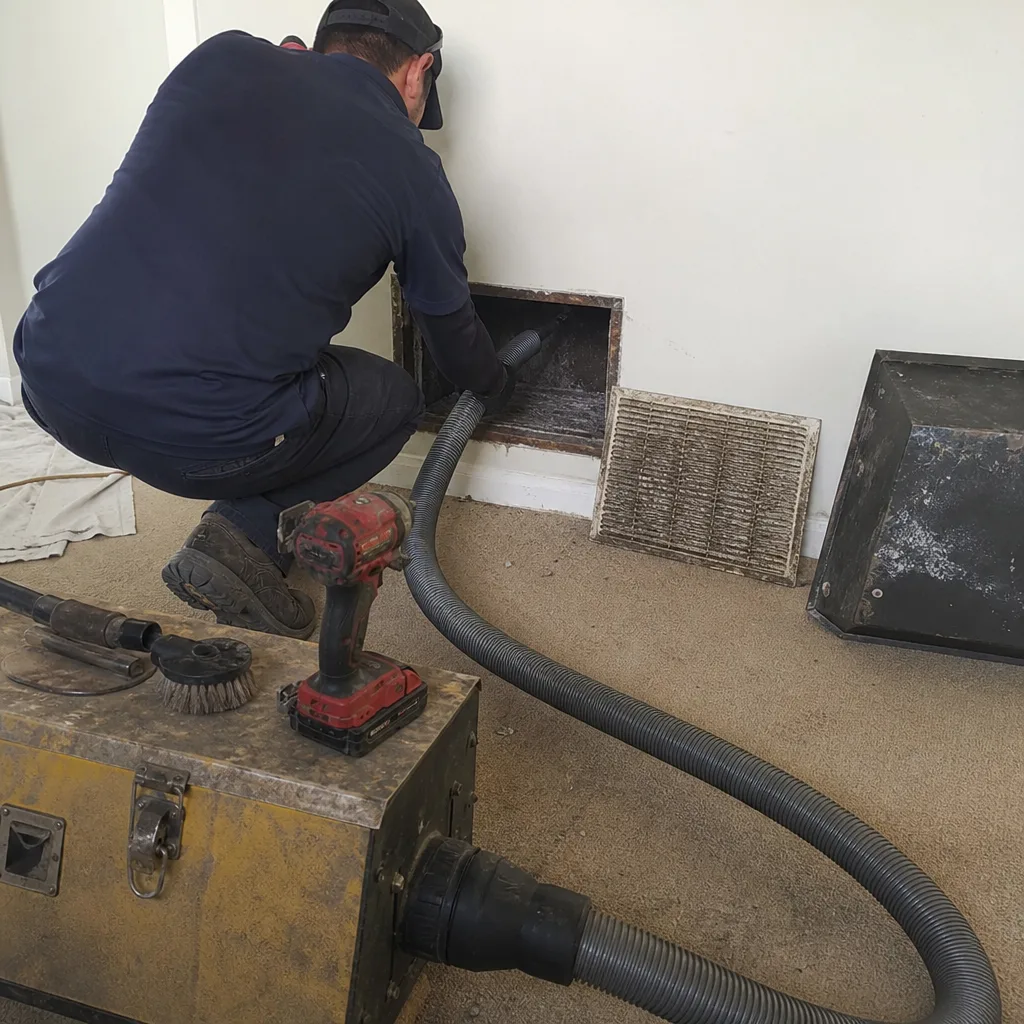 Before
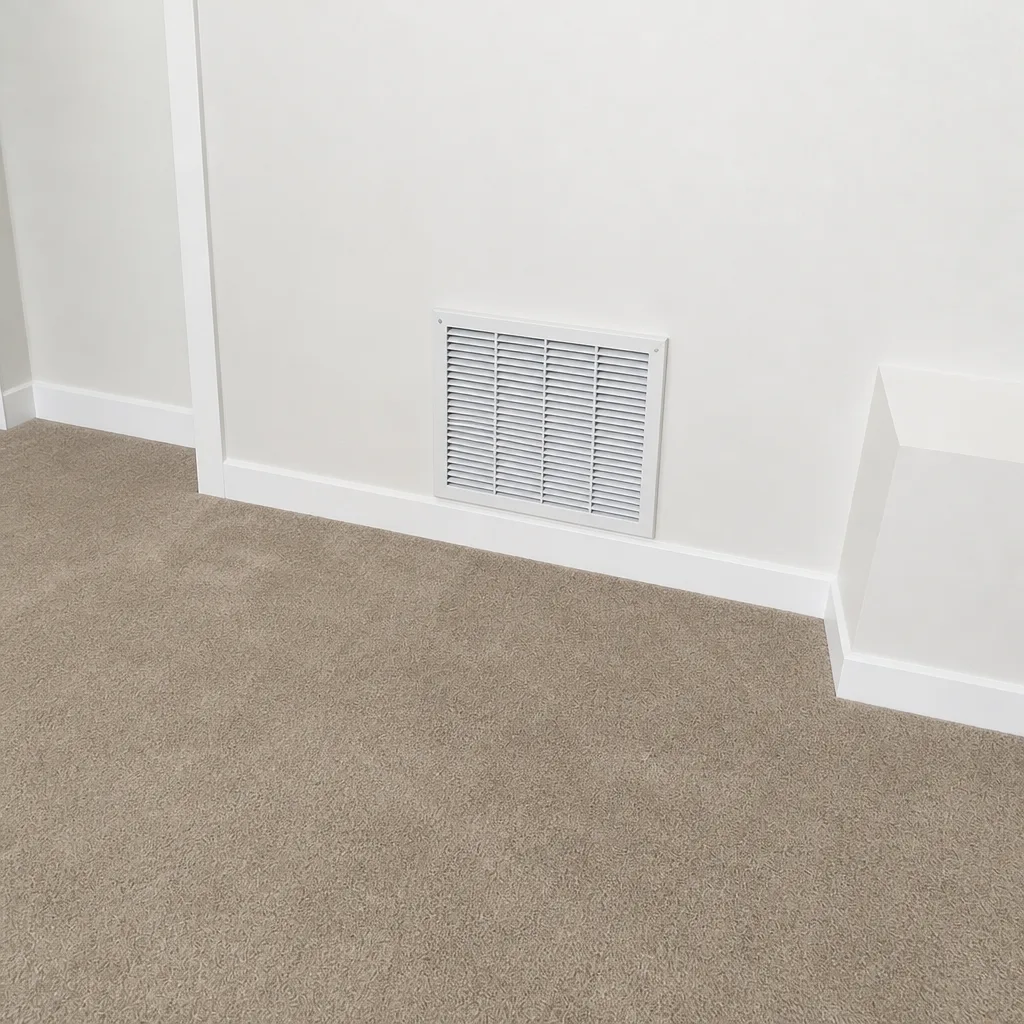 After
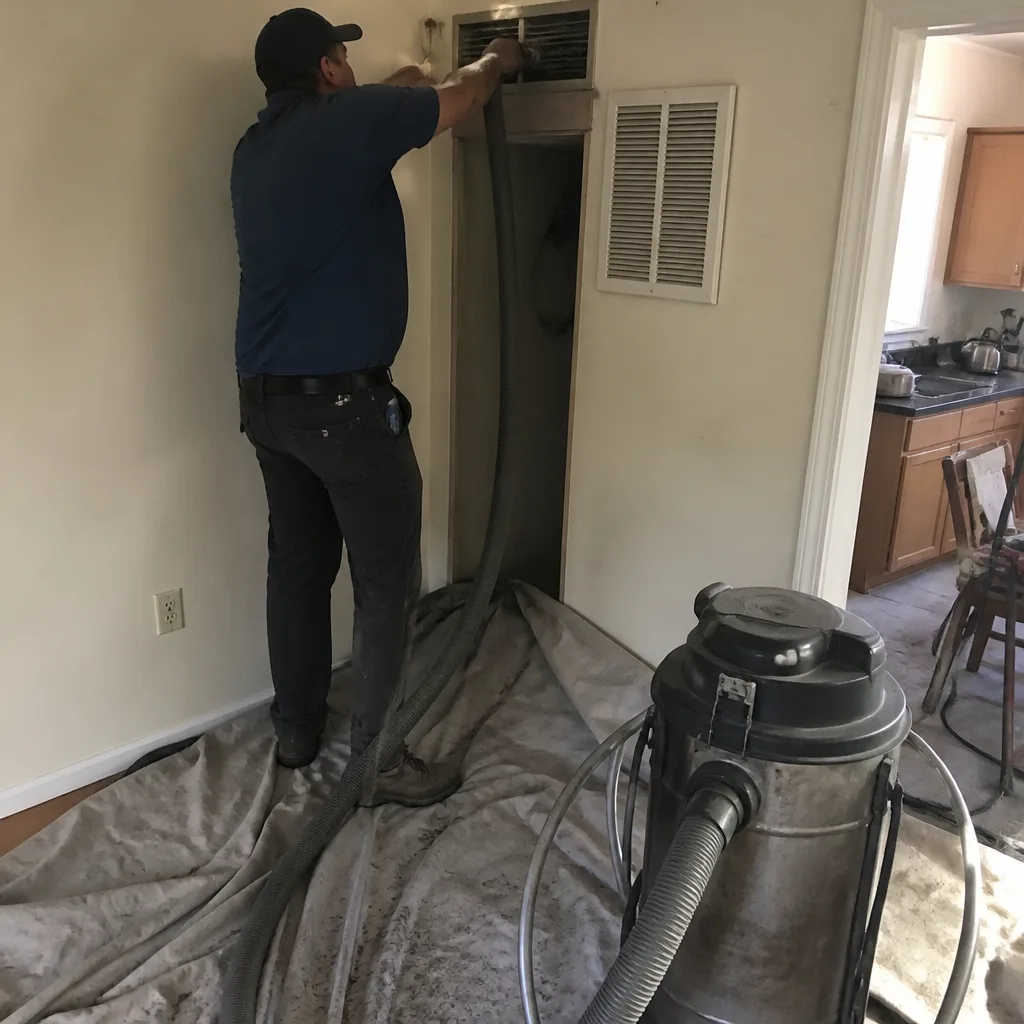 Before
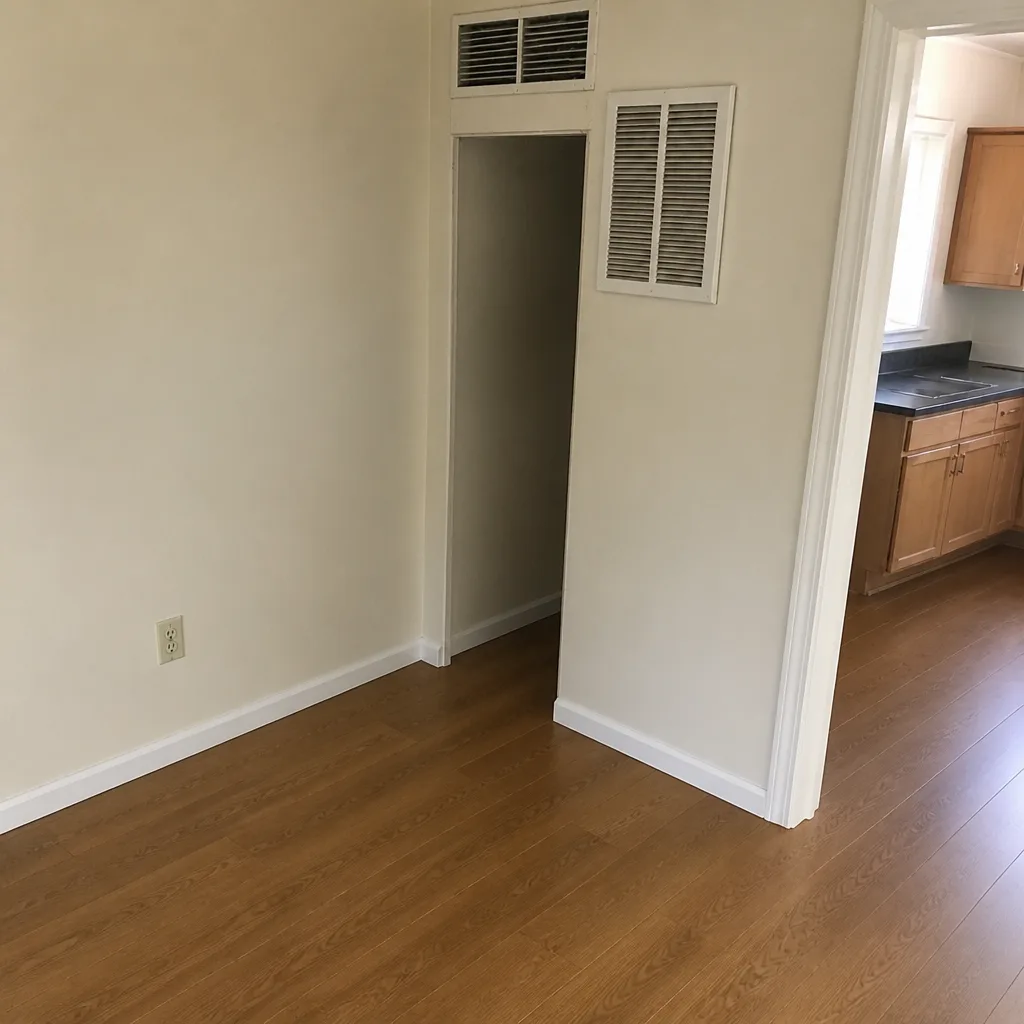 After
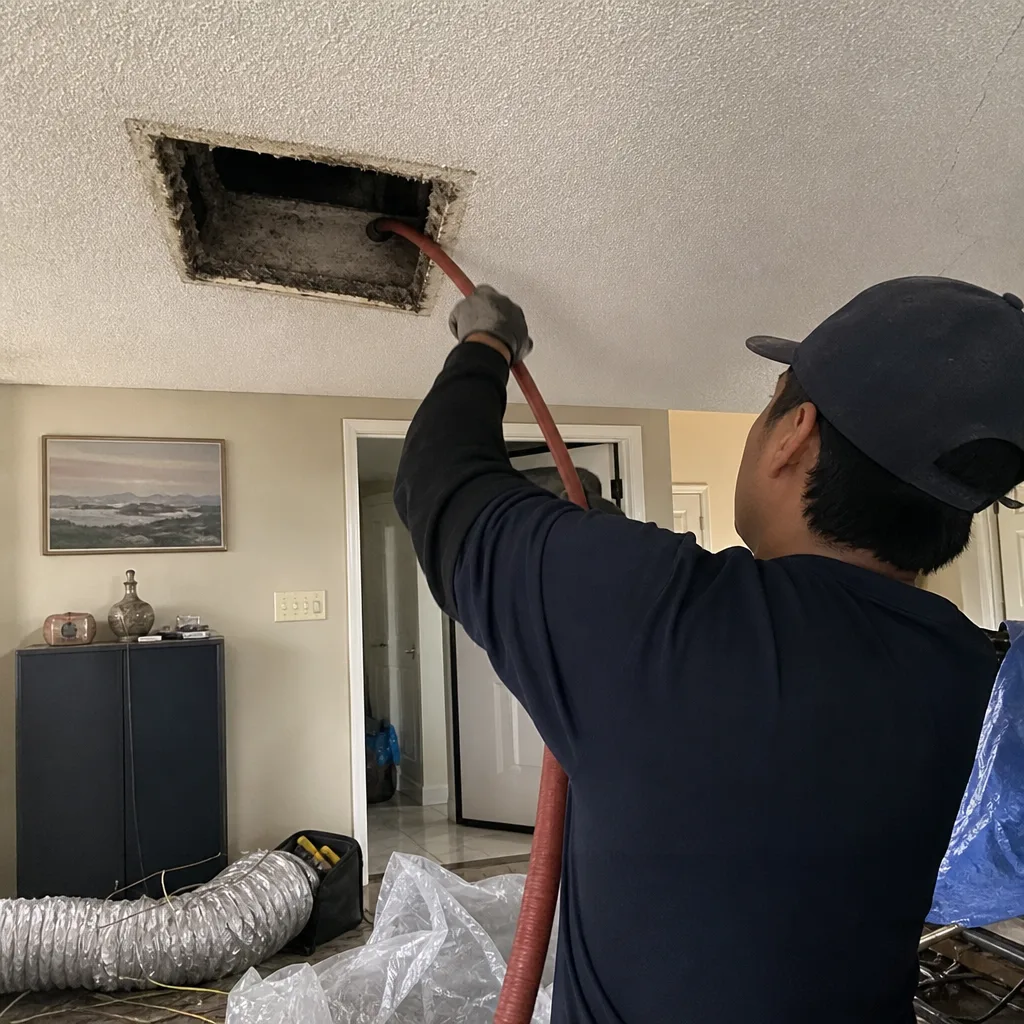 Before
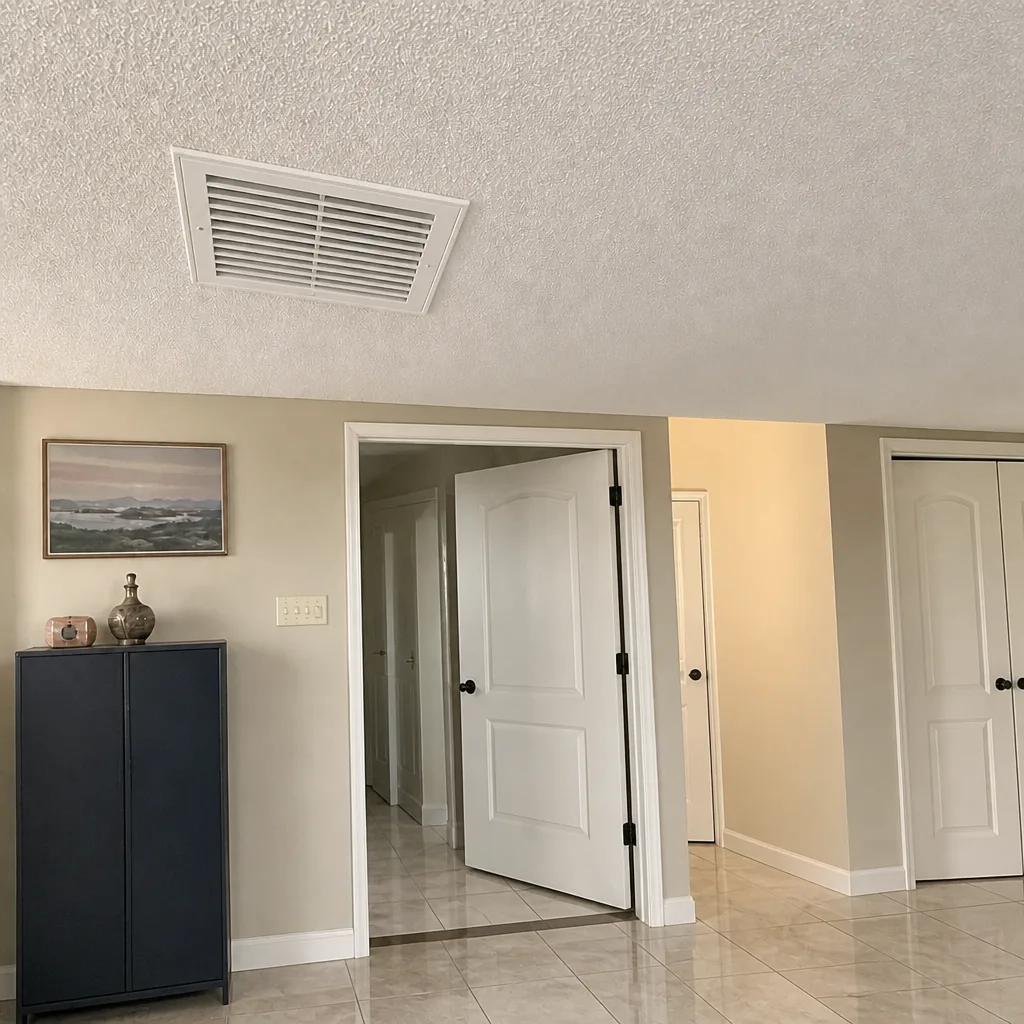 After
When to Call a Professional
Call a professional if you’ve noticed dust settling unusually fast after cleaning, if the air smells stale or musty when the system runs, if someone in the home has unexplained allergy symptoms that worsen at home, or if you’ve completed a renovation that left drywall dust in the air. Wildfire smoke seasons are also a clear trigger. If you’ve never had your ducts inspected and the home is more than a few years old, an inspection is the starting point. Vermont Vista residents can call (833) 620-6973 for a free estimate. We answer 24/7. Fast dispatch from 7am to 7pm, Sunday through Friday.
Frequently Asked Questions
For a typical single-family home in Vermont Vista with one air handler and 10 to 16 registers, a full-scope cleaning typically runs $450 to $850. Larger homes or two-system setups run higher, and any needed repair is quoted separately after inspection. The written estimate sets the final price. Call (833) 620-6973 for an exact quote – estimates are free.
Cheap quotes usually mean a blow-and-go: one vacuum connected to a register, no negative-air containment, no air handler work, and no before-and-after documentation. The debris gets stirred and partly redistributed into the living space instead of removed. The job costs less because most of the work is skipped.
Ask for before-and-after photos of the same duct locations, ask to see the debris collected, and ask which access points were opened. A professional cleaning leaves evidence. No evidence means no way to verify the job, and you should treat it as unverified. Call (833) 620-6973 to schedule an inspection with documentation included.
Most homes benefit from a cleaning every 3 to 5 years, but Vermont Vista’s dry climate and wildfire seasons can shorten that interval. Homes near fire-prone hillsides or with allergy sufferers may want an inspection every year or two. The honest answer depends on what the inspection finds, not a calendar.
It can, when the cleaning removes the actual source of airborne irritants: accumulated dust, pet dander, and fine particulate sitting in the duct system and air handler. Cleaning that skips the air handler compartment often fails to change noticeable allergy symptoms, because the debris re-enters the supply air within weeks. Ask whether the air handler and evaporator coil are included in the quote.
Air duct repair addresses disconnected joints, crushed flex duct, holes, and sagging runs that a cleaning alone cannot fix. A full-scope company flags repair issues during cleaning and gives you a price before leaving. Leaving a disconnected return duct unrepaired means the system pulls unfiltered air from the attic or crawlspace no matter how clean the rest of the ducts are.
The Bottom Line
Air duct cleaning in Vermont Vista is a diagnostic process, not a single procedure. The homes here face dry-climate dust and wildfire particulate that accumulate faster than in coastal markets, and the only cleaning that actually helps is source removal: mechanical agitation plus negative-air extraction, including the air handler and both return and supply sides. Verify any job with before-and-after photos, debris evidence, and airflow checks. If the ducts have damage, repair should be part of the same scope. Get the diagnostic right and you’ll know exactly what you’re paying for – and exactly what’s in the air your family breathes.
Written by the team at Rivermark Air Duct Cleaning, serving Vermont Vista since 2014.